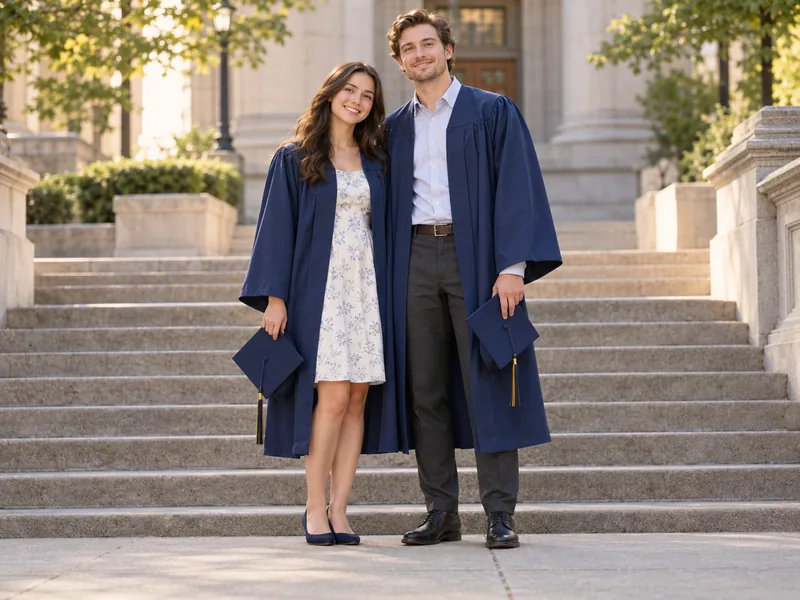
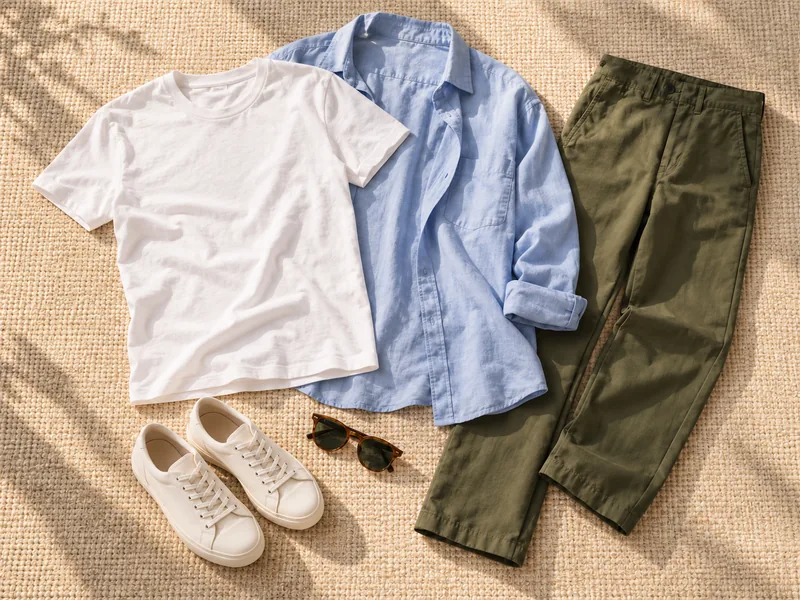
Check your gown and your school instructions
Read the clothing and footwear information supplied for your ceremony. If you cannot tell whether a requirement applies to you, contact the school rather than guessing from another graduation's photographs. We cannot confirm your institution's current rules without its own information.
Next, put on the gown with one possible outfit. We suggest checking the neckline, sleeve openings, hem, and room to sit and move. Work with what your particular robe shows instead of planning around a fixed neckline or skirt-length measurement. Keep the cap, shoes, and any required academic accessories together for the final try-on.
Dresses, skirts, and trouser outfits under the gown
A starting option is a navy dress with black flats. We suggest a shape that lets you sit, stand, and reach without repeatedly adjusting it. Try it with the gown open and closed as instructed for your ceremony. If you prefer separate pieces, use a comfortable blouse with a skirt or trousers instead; this guide does not make a dress compulsory.
Herff Jones lists dress trousers and skirts among its under-gown options for women. This is the supplier's advice, not a rule issued by your school. Source
Necklines, hems, and what shows in pictures
When choosing what to wear under graduation gown fabric that is light or pale, we suggest checking the full outfit in daylight and in a photograph. See whether you are happy with the colors, outlines, and hems that are visible. Do not assume that every black gown conceals everything or that every white gown needs the same base layer.
If your dress or skirt extends below the robe, decide whether you like the combination and can walk comfortably. We do not give a universal hem distance: your clothes, gown, and ceremony instructions are the things to check.
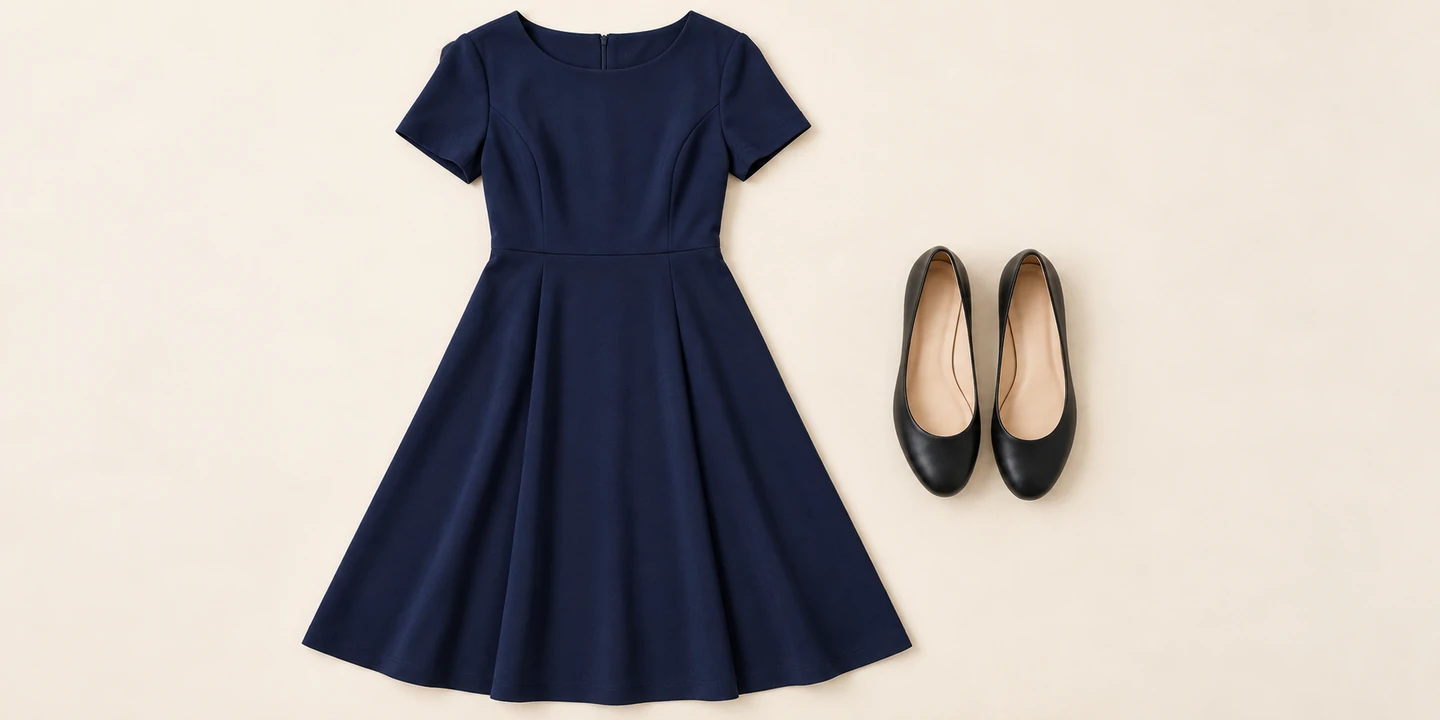
- Navy dress
- Black flats
Shirts and trousers under a cap and gown
We suggest a white collared shirt, navy trousers, and black shoes as one simple starting outfit. A different color can be your choice when it meets the actual instructions. Try the shirt tucked in or otherwise arranged as you intend to wear it, then sit down and raise your arms. Adjust anything that pulls, bunches, or needs constant attention.
Herff Jones suggests a collared shirt for men and treats a tie as an optional addition in its own guide. Check your school's directions before using that suggestion for your ceremony. Source
We suggest checking the collar with the gown and any approved academic accessories, then deciding whether a tie is wanted or required. This is more useful than copying a complete look without trying it under your own robe.
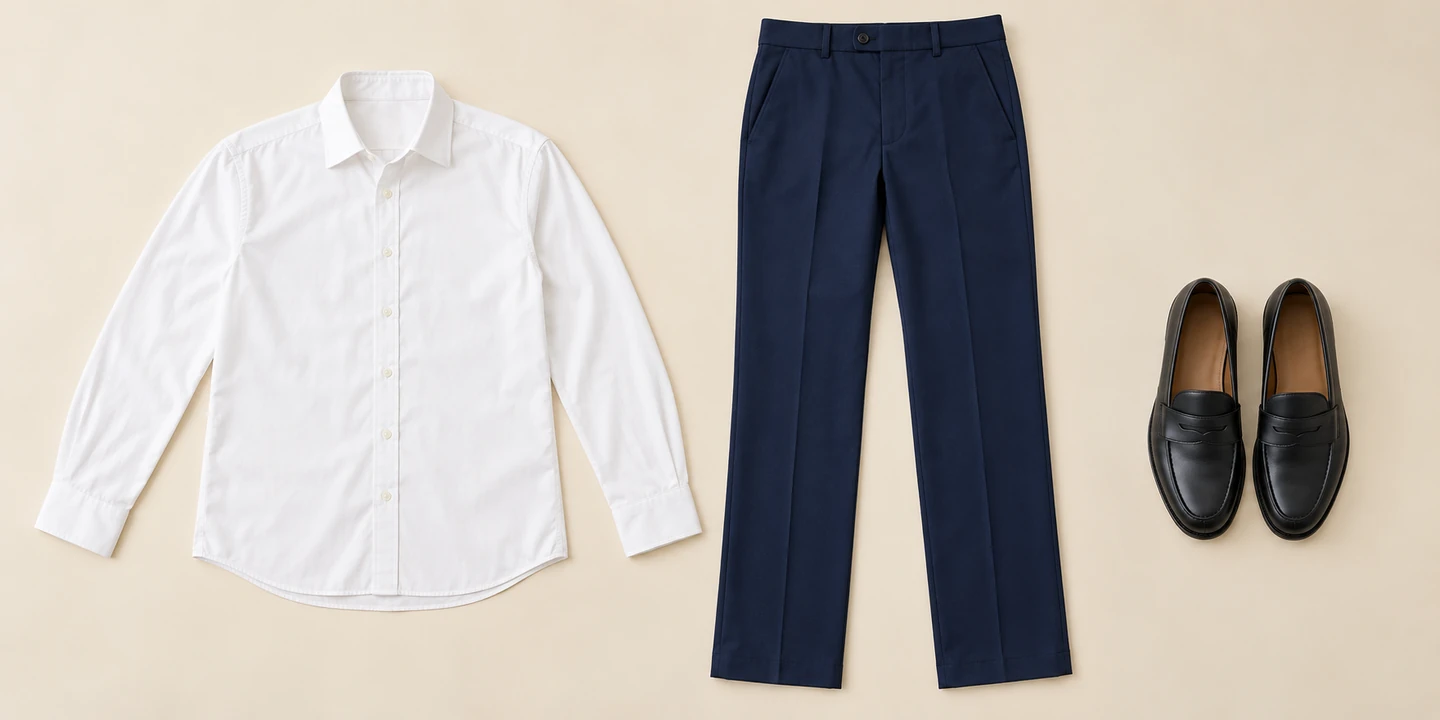
- White collared shirt
- Navy trousers
- Black shoes
Comfortable base layers and underwear
We suggest wearing the underwear and socks or hosiery you plan to use when you test the outfit. Check straps, seams, waistbands, and any edges that concern you under the clothes and gown. Choose pieces you find comfortable for the planned sitting and walking, rather than assuming you need a particular shaping garment.
If something rubs or requires repeated adjustment during the try-on, change that item before deciding on the rest. We do not recommend a fabric or underwear type as a medical solution or promise a particular cooling effect. Your own comfort check is the purpose of this step.
Warm and cold ceremony layers
To work out what to wear under graduation gown layers for the forecast, we suggest testing a lighter outfit first and adding only what you need. Consider the journey, waiting arrangements, and indoor or outdoor portions described by your school. Do not assume all spring ceremonies are outdoors or that an auditorium will have a particular temperature.
On a cold day, try a thin layer under the robe if it remains comfortable and follows the instructions. You can also plan a removable outdoor coat, then check where you can keep it. For a warm day, we suggest avoiding extra pieces you do not want beneath the gown. These are clothing choices, not temperature-safety guarantees.
| Conditions | Our layer suggestion | Check |
|---|---|---|
| Warm conditions | Start with a lighter base outfit and avoid unwanted extra pieces | The forecast, ceremony arrangements, and comfort in your actual gown |
| Cold journey | Try a thin base layer or plan a removable outdoor coat | School instructions, comfortable movement, and coat storage |
| Indoor seating | Keep only the layers you find comfortable beneath the robe | The school’s arrangements; do not assume the room temperature |
On a narrow screen, scroll the table sideways.
Shoes for walking and standing in a gown
We suggest shoes that stay secure while you walk, turn, and use a step. Try them with the gown so you can check the fabric near your feet. If the route includes grass or uneven ground, choose an option you can walk in steadily instead of relying on a photograph of someone else's shoes.
Herff Jones recommends dress shoes and gives conservative footwear advice, but that does not establish a nationwide school ban on sandals or sneakers. Source
If you want to wear sneakers, sandals, or another specific style, check the ceremony's actual footwear instructions. If there is no direction, we suggest a familiar flat or other secure shoe that works with your clothes and route.
Do you need a suit, white clothes, or a specific outfit?
A suit is an option to test, not a requirement confirmed by this page. If your school asks for one, follow its instructions; otherwise, we suggest considering whether the extra jacket is comfortable under the robe and useful for your other plans.
The same approach applies to white clothes and jeans. Check for an explicit instruction, then make a personal choice within it. We do not tell every graduate to wear white or promise that denim will be accepted at every ceremony. If you are unsure, ask the school before buying or packing an outfit.
Try the whole outfit before the ceremony
The final test for what to wear under graduation gown layers is the complete combination, not each piece on its own. We suggest this short check:
Try the complete outfit before the ceremony
- Put on the planned base clothes, underwear, socks or hosiery, and shoes.
- Add the gown, cap, and required academic accessories as instructed.
- Sit, stand, walk, and use a step; adjust any catching hem or uncomfortable layer.
- Check the neckline and visible clothes in a mirror or photograph.
- Set aside the outdoor layer and confirm the school’s instructions once more.
For the ceremony, guests, family photographs, and plans afterward, return to the graduation guide. Keep this page's task focused on clothes worn with your gown.