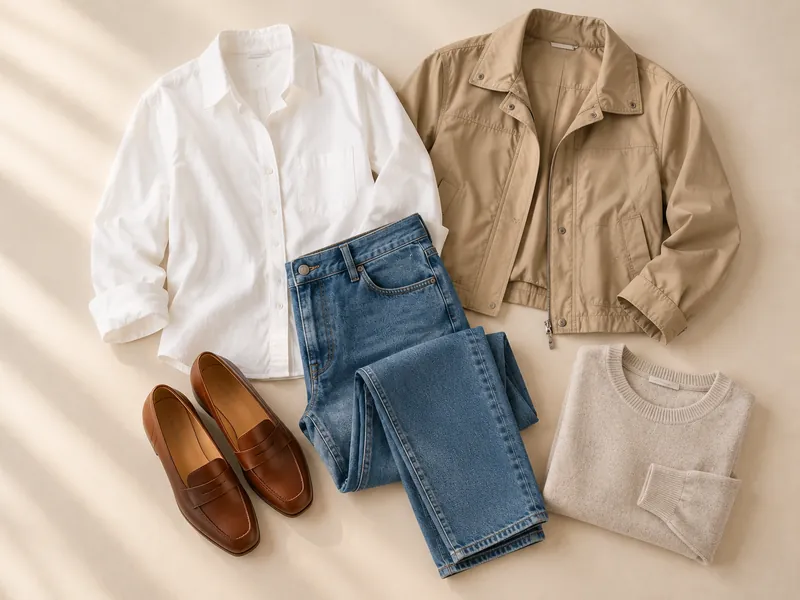
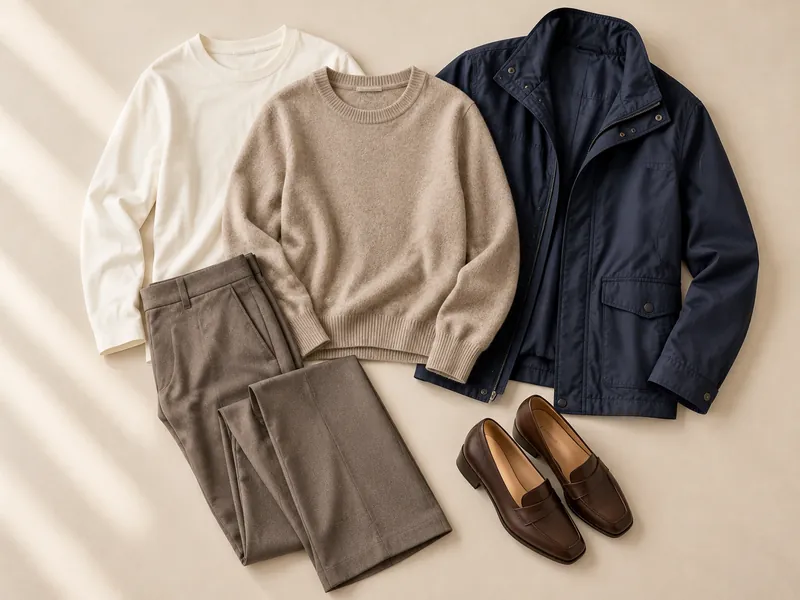
- 50°FStart with a jacket; adjust for wind and rain.
- 60°FA lighter, removable layer for cool hours.
- 70°FDeciding what to wear in 70 degree weather?
Start with the day you actually have
Choose for the hours you will be out, rather than the single number on a weather app. We suggest noting the departure temperature, the forecast for your return, and where you will spend the time between. A short errand followed by an afternoon indoors calls for a different clothing decision from an outdoor gathering that continues after dinner.
Use this table to plan what to wear in 70 degree weather. Each row gives an adjustment to try with your existing clothes, rather than a mandatory extra item.
| Your plan | Our starting choice | Carry or change |
|---|---|---|
| A short daytime outing in sunshine | A light top and your preferred trousers, skirt, or permitted shorts | Decide whether you want more coverage for the actual outing. |
| Several hours in a cool room | A top and bottom you like without an outer layer | Pack a thin cardigan or overshirt to try indoors. |
| Rain in the forecast | Your ordinary outfit, checked with the day's shoes | Choose rain protection and shoes for the expected ground conditions. |
| A return after sunset | A daytime outfit that also works with a light outer layer | Check the evening forecast before choosing that layer. |
On a narrow screen, scroll the table sideways.
Tops, jeans, shorts, and dresses
We suggest trying a light T-shirt, blouse, or thin long-sleeved shirt before reaching for a thick sweatshirt. Check the complete combination while sitting, reaching, and walking. If you want arm coverage, compare a lightweight long sleeve with a short sleeve plus a removable layer; you do not have to choose a heavier garment just to cover your arms.
A dress is an option in our outfit examples. Choose its length and coverage for your plans, then test it with the shoes and outer layer you intend to use. We do not set a temperature at which everyone should wear a dress.
Jeans or shorts?
When choosing what to wear in 70 degree weather, compare the actual garments. Try your jeans with the intended top, rather than deciding from the word denim alone. If your thick pair feels too warm or restrictive, compare lighter trousers, a skirt, or shorts you already own.
For shorts, check the destination's requirements and your preferred coverage while seated. For sweatpants, compare the thickness and fit with your other options. Our suggestion is to choose a pair you want to spend the planned hours in, rather than treating jeans, shorts, or sweatpants as universally right or wrong.
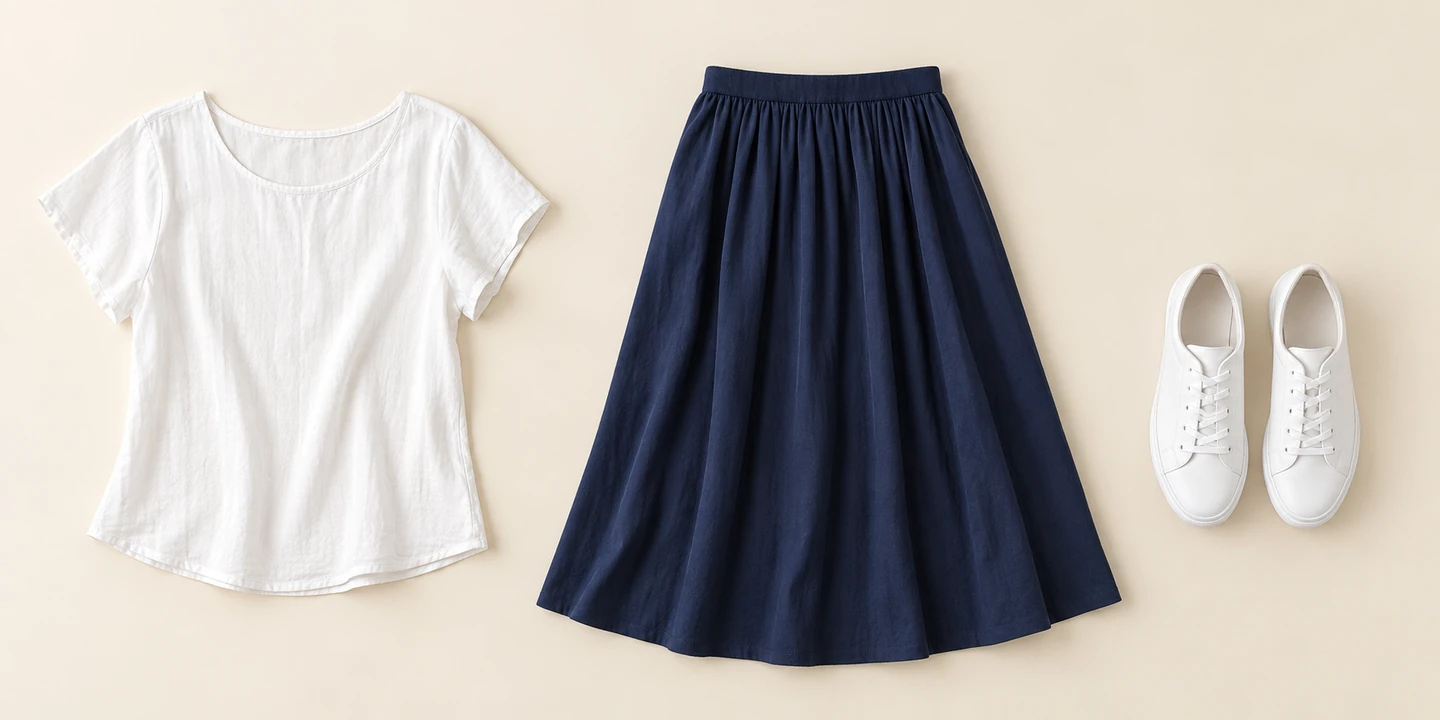
- White lightweight top
- Navy midi skirt
- White sneakers
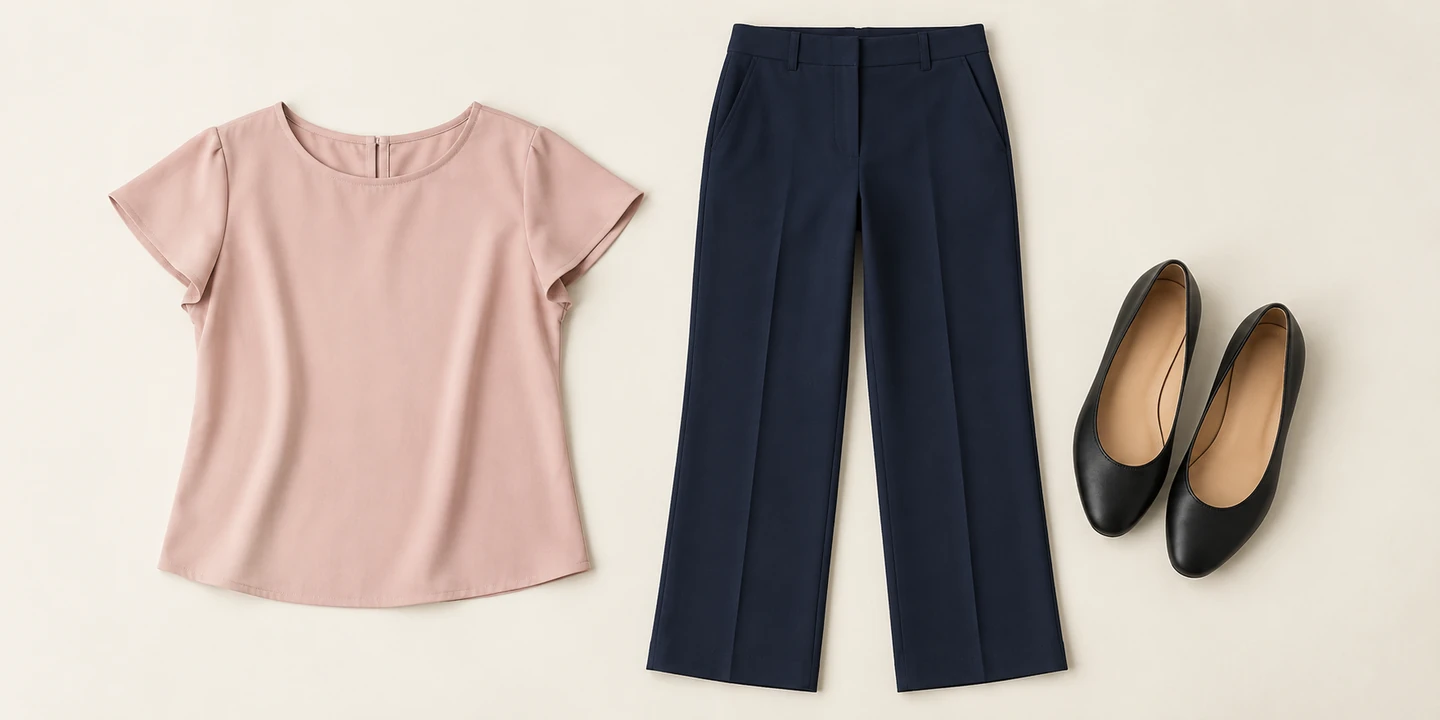
- Blush short-sleeved top
- Navy trousers
- Black flats
Do you need a jacket or hoodie?
We suggest making two decisions: whether to carry an outer layer and whether to wear it right now. You can leave home in a T-shirt while carrying a thin cardigan for an air-conditioned room or a later return. Try that layer over the complete outfit so you can check the sleeves and shoulders together.
If you are considering a hoodie, compare your particular hoodie with a lighter option. An unlined, lightweight one and a thick fleece hoodie are separate choices. If the thick version feels excessive during your clothing check, try an overshirt or leave the hoodie packed until you want it. There is no need to label someone's preference unreasonable.
For what to wear in 70 degree weather with a jacket, our starting choice is one light layer you can remove and carry. We suggest avoiding several extra layers chosen only because the morning felt different from the afternoon forecast. Recheck the actual return temperature instead.
70-degree weather outfits for women and men
These four combinations are editorial examples using ordinary clothes. Pick by fit and clothing preference; women and men can use either the skirt or trouser options, without buying a matching outfit.
- Skirt combination: a White lightweight top, a Navy midi skirt, and White sneakers. Carry a thin cardigan if it suits your indoor or evening plan.
- Trouser combination: a Blush short-sleeved top, Navy trousers, and Black flats. Try the waistband and shoes while seated and walking.
- Casual trouser combination: a White T-shirt, Navy trousers, and White sneakers. An overshirt is an optional carried layer.
- Shorts combination: a Deep blue lightweight shirt, Nude/beige shorts, and Black shoes chosen for your route. Substitute trousers if your destination does not permit shorts or you prefer more coverage.
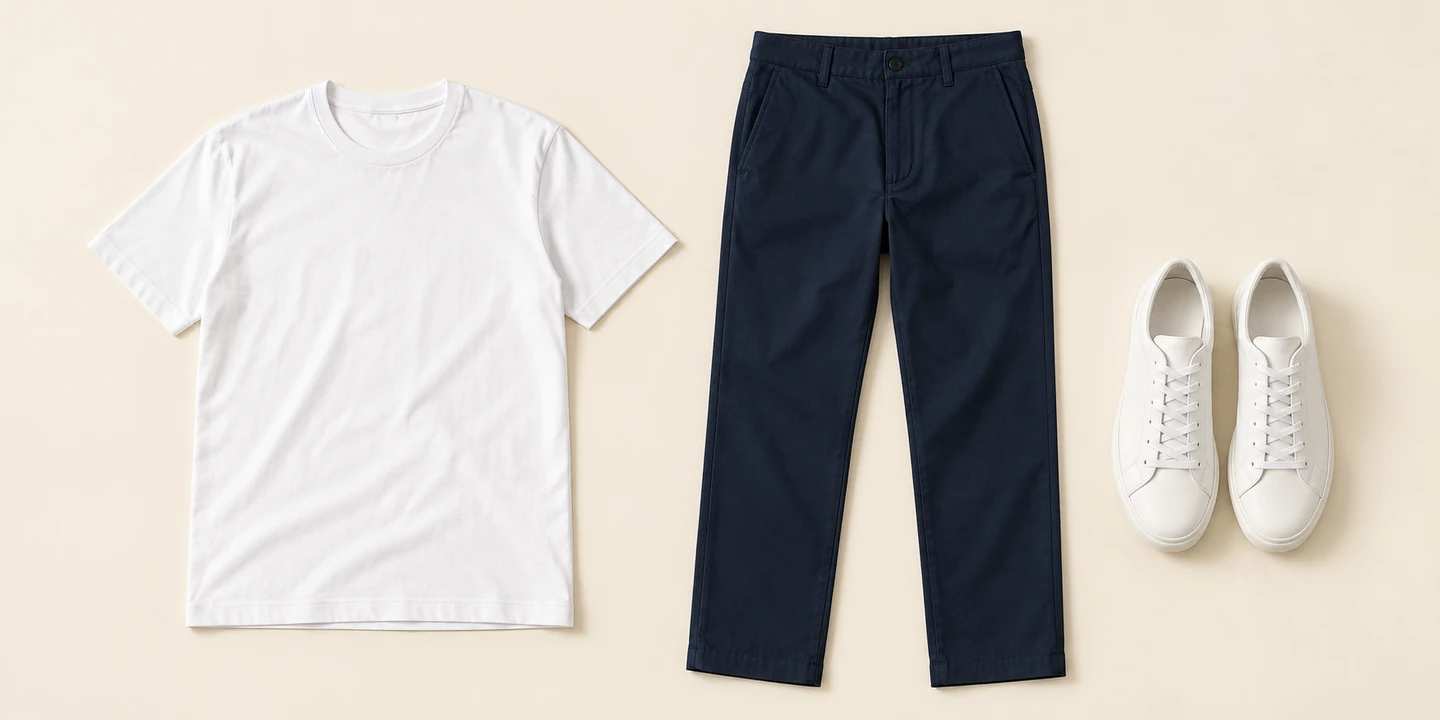
- White T-shirt
- Navy trousers
- White sneakers
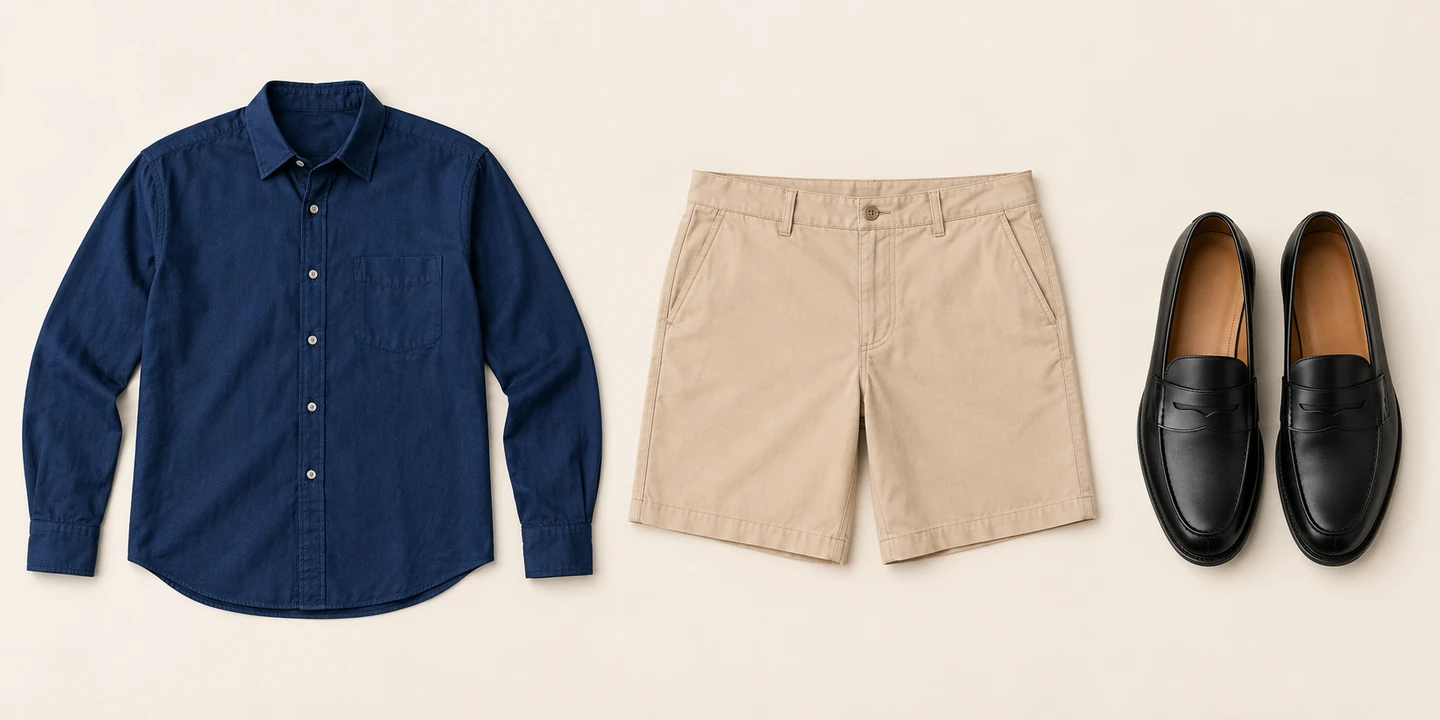
- Deep blue lightweight shirt
- Nude or beige shorts
- Black shoes chosen for your route
Casual plans, work, and dinner
Use the examples as a starting point for what to wear in 70 degree weather, then apply the destination's instructions. For work or dinner, we suggest choosing your required level of dress first and selecting lighter pieces within it. A weather forecast does not establish whether jeans, shorts, trainers, or a particular neckline are accepted at that workplace or restaurant.
Sunshine, wind, rain, and cool rooms
We suggest adjusting one part of the outfit at a time. For a sunny outdoor plan, decide how much coverage you want and what the activity requires. For a cloudy afternoon, keep the same basic outfit if you like it and have the removable layer available. Do not add a fixed number of degrees to the forecast to choose clothes.
The National Weather Service defines wind chill only for temperatures at or below 50°F and winds above 3 mph. We do not calculate a wind-chill number for 70°F. Source
For a windy outing, we suggest checking the forecast and trying your chosen light outer layer. For rain, consider whether your planned shoes and rain protection suit the route; this is not a promise that a particular shoe prevents slipping. If your usual top feels uncomfortable on a humid day, compare a lighter alternative before leaving. For a cool indoor room, put on the carried layer when you want it, rather than wearing a heavy outfit throughout the journey.
Walking, active plans, and packing
For a walk, spectator game, zoo visit, or amusement park, we suggest choosing shoes for the time you expect to spend on your feet, then testing them with your intended socks. Check the venue's instructions and the forecast for the whole visit. Sitting through an evening game and taking a brief daytime walk are different plans, even if both searches mention the same temperature.
For what to wear in 70 degree weather while running or exercising, use these ideas only as ordinary clothing choices to review alongside the activity's requirements. For a trip, pack a complete combination and the optional layer together. A beach visit does not mean this outfit covers boating or kayaking equipment; skiing, water activities, and camping need their own planning beyond the air temperature.
Before you leave: a quick clothing check
Finish your outfit decision with this list:
Before you leave
- Check the hourly forecast for the actual location, including your return.
- Confirm the destination's clothing requirements.
- Sit, reach, and walk in the complete outfit, including shoes.
- Choose whether to carry a light removable layer and where you will put it.
- Adjust for the actual rain, wind, indoor setting, and planned activity.
For a cooler part of the day, compare our 60-degree weather clothing guide and choose layers for that forecast. This page covers adult outfit decisions, including adult students or accompanying adults checking their own setting's requirements; it does not provide children's uniform, infant clothing, or sleep guidance.