Start with the service and reception invitations
Read each part of the invitation separately. Note the venue, clothing wording, and whether you are attending both events. If a reception has a theme, ask whether guests are meant to dress to match it. Do not assume that a party outfit also meets the service's requirements.
We suggest deciding whether one base outfit can work for both settings before planning a change. A jacket or cardigan may let you adjust the combination, but only if the clothes underneath fit the service's instructions too. If you are unsure, describe the actual outfit to the host instead of asking only whether the event is formal.
| Part of the celebration | Whose instructions? | What to confirm | Possible adjustment |
|---|---|---|---|
| Service | The actual congregation and your invitation | Clothing coverage, head coverings, your role, and formality | Keep any layer needed to meet the actual instructions |
| Reception | The host and reception venue | Dress-code wording, any clothing theme, and expected activities | If useful, change shoes or a removable layer; a full change is not automatically needed |
On a narrow screen, scroll the table sideways.
For what to wear for bat mitzvah celebrations that involve two venues, we suggest checking both before buying anything. A complete combination you already own may work once the expectations are clear.
Synagogue clothing and head coverings
Check the congregation's guidance
Reform Judaism's Shabbat guide says clothing customs vary by congregation. It gives business casual as a guide for Shabbat worship and identifies suits and dresses as appropriate for a bar or bat mitzvah in a synagogue sanctuary. These are that source's recommendations, not a rule issued by every congregation. Source
Chabad's etiquette guide recommends dressing up unless told otherwise, with examples including a suit or button-down shirt and slacks for men and a modest dress for women. It also says men should expect to wear a kippah. Keep this guidance attributed to Chabad rather than applying it to every Jewish community. Source
We suggest asking the specific congregation about shoulder coverage, trousers, skirt length, and any requirements for a role in the service. Do not infer all of those details from a denominational label or a photograph. If you have a question about a religious or medical head covering, ask the congregation directly.
What do non-Jews wear to a bar mitzvah?
Check the same event and congregation instructions as other invited guests. Reform Judaism describes kippot as optional in its Reform context for people of different faiths; that differs from Chabad's stated expectation for men. Reform Judaism also describes tallitot as prayer shawls worn by Jewish teens who have become b'nai mitzvah and Jewish adults. Source
We suggest asking a host or greeter what is expected of you rather than selecting ritual garments as fashion accessories. A question about a kippah should not be treated as a question about wearing a tallit; check each item separately.
What to wear for bat mitzvah: adult guest outfits
Dresses, skirts, and trouser outfits
One option we suggest is a navy dress, charcoal cardigan, and flats, provided it meets the congregation's actual guidance. Test the outfit while seated and standing. Choose a neckline, sleeve, and hem that work for those movements and for the instructions you have received.
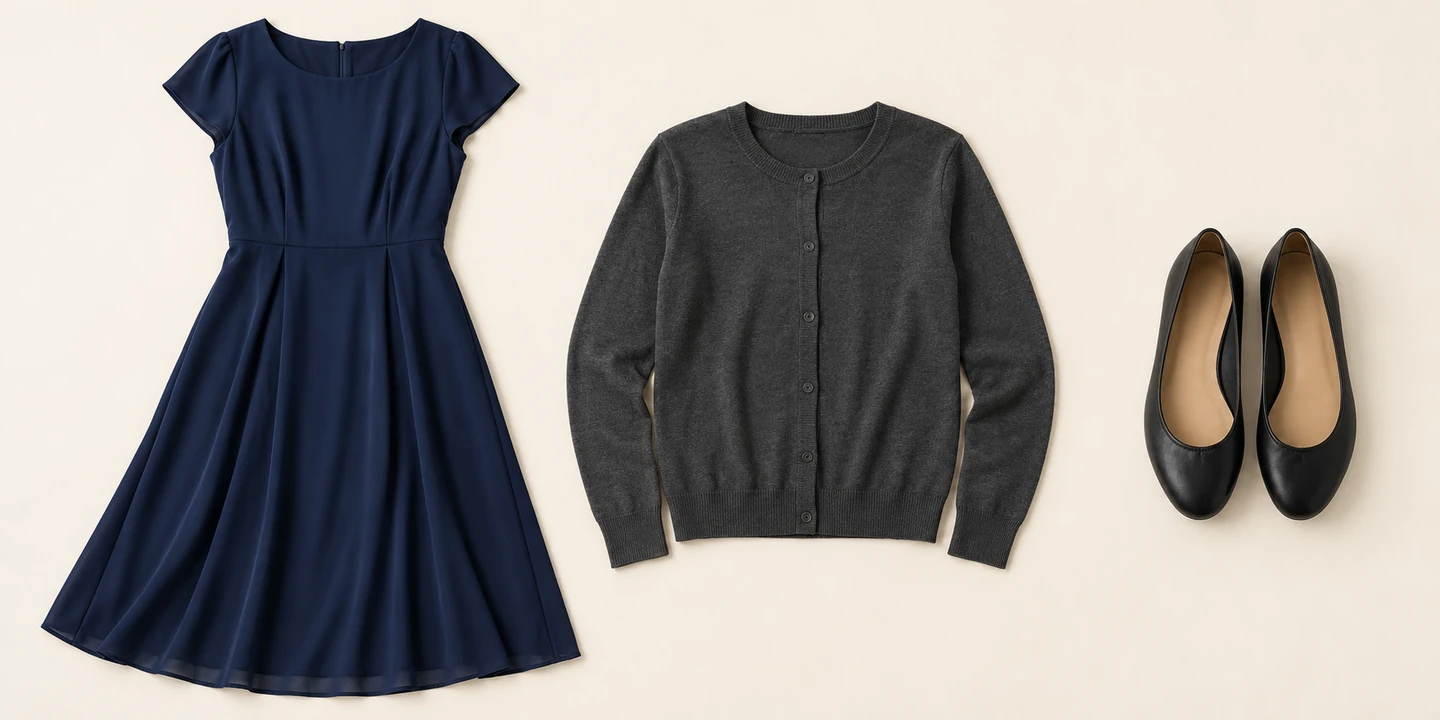
- Navy dress
- Charcoal cardigan
- Black flats
If you prefer trousers, ask the congregation about that option, then try a blouse with neat trousers and comfortable shoes. A skirt and blouse offer another combination. The examples are alternatives to choose from, not a list of clothes that every guest must have. If an outer layer provides required coverage, plan to keep that coverage in place during the service.
Suits and outfits without a suit
For what to wear for bat mitzvah services without a suit, we suggest beginning with a white collared shirt, navy trousers, and shoes you can comfortably wear for the event. Add a charcoal jacket or tie if the invitation or congregation calls for it. If you already own a suitable suit and enjoy wearing it, that can be your starting point instead.
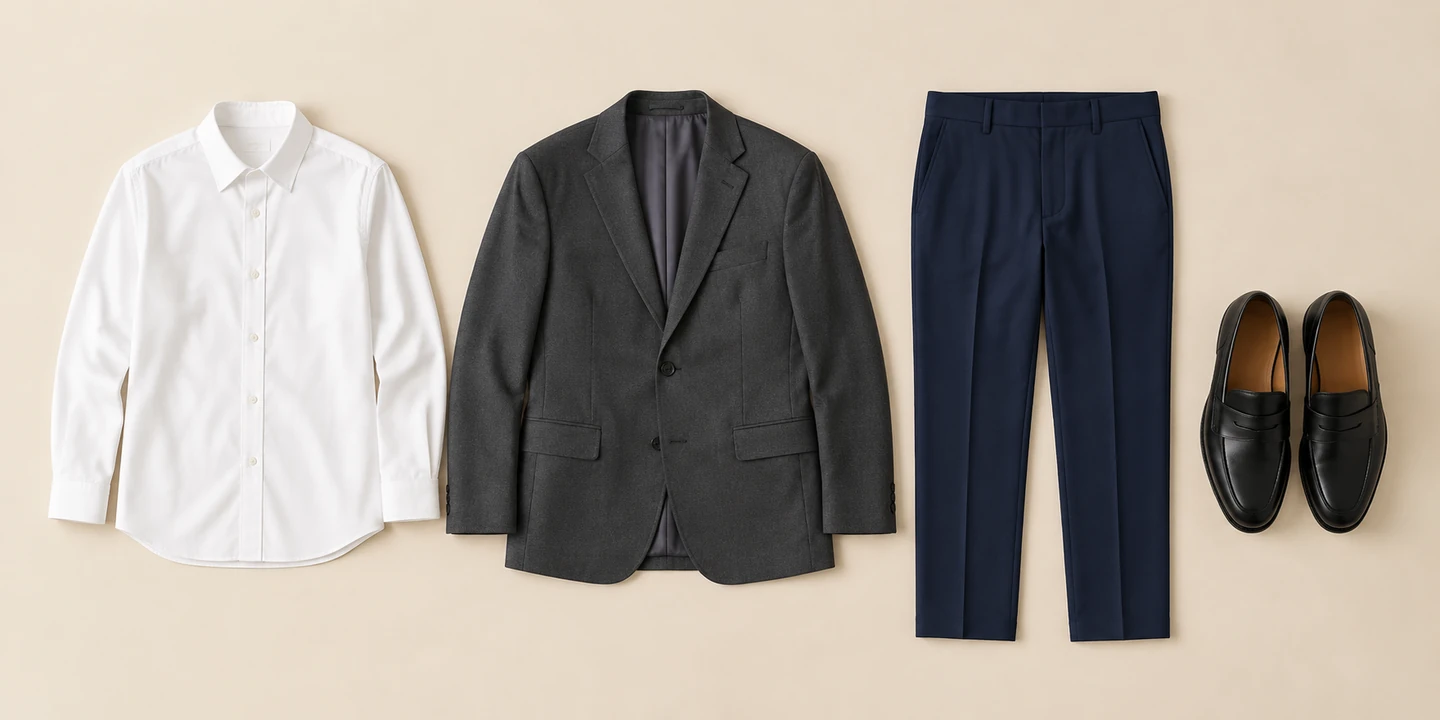
- White collared shirt
- Charcoal optional jacket
- Navy trousers
- Black loafers
Ask about the actual combination if the clothing instructions leave you uncertain. You do not need to guess from what another family wore at another event.
Reception and after-party outfits
For the reception, follow the host's wording and the venue's instructions. If the invitation uses casual, cocktail, formal, or another dress term without an explanation, ask what the host expects. Do not replace the stated request with a presumed party style.
We suggest thinking about sitting, standing, and any dancing you plan to do. Check your shoes and whether the outfit lets you move without repeated adjustment. You might keep the service outfit and change a layer, or take a separate outfit if that better fits the invitation. A change is an option in this guide, not an assumed requirement.
When deciding what to wear for bat mitzvah receptions with a theme, confirm whether the theme applies to clothing. Choose the base outfit first, then add an accessory only if you want it and it suits the host's request.
Colors, jeans, sneakers, and what to avoid
Are any colors off limits?
This guide does not give a universal list of forbidden colors. Ask about the host's requested palette, if any. Our suggested navy, white, and charcoal combinations are starting points for coordinating clothes; they are not claims about religious meaning or permission.
If you want to wear black, white, red, or a bright print, ask about any event-specific request rather than relying on an online color ban. The host's instructions apply to that celebration and should be checked alongside the congregation's guidance for the service.
Jeans and sneakers
Check both settings before choosing them. Reform Judaism's worship guide advises avoiding athletic clothing and several other casual items, while emphasizing congregational variation. That advice is not an item-by-item sneaker or jeans policy for your event. Source
We suggest neat trousers and comfortable shoes as an alternative while you clarify the instructions. Do not assume that something welcome at a reception is also welcome at the synagogue.
Attending with a 12-year-old guest
For an invited 12-year-old, we suggest following the same service and reception checks, then choosing clothes that allow comfortable movement. Options to ask about include a simple dress with a layer, a skirt and top, or a shirt with trousers. Let the young guest sit, stand, and walk in the full outfit before the day.
Keep the child's preferences in the decision. A shoe that hurts or a collar that feels restrictive is worth resolving before leaving. This section is for guests; it does not prescribe the young celebrant's ceremonial clothing.
Check your outfit before leaving
For what to wear for bat mitzvah or bar mitzvah events, finish with the actual instructions rather than a generic outfit list. We suggest this check:
- Confirm which events you are invited to attend.
- Check the congregation's clothing and head-covering guidance.
- Ask about any extra instructions if you have a role in the service.
- Try sitting, standing, and walking in the complete outfit.
- Choose a layer for the forecast and your own comfort.
- Check the reception instructions separately.
Find a different event through what to wear by occasion.