What is black tie attire?
Emily Post places this dress code above business clothing and below white tie in formality. Its guide lists tuxedo pieces for men and several formal dress options for women. This is the institution's published etiquette guidance; your invitation may include more specific instructions. Source
We suggest reading the complete invitation before planning black tie attire. Look for the exact dress code, any theme or color request, and information applying to your role. A general word such as formal, a black necktie, or a photograph of a gala is not enough for this guide to confirm the host's intended dress code. Ask if the wording leaves you unsure.
Use the sections below to build an outfit, then check it against that information. We do not treat the name of an event as proof of a particular clothing requirement.
Black tie attire for men
We suggest making the tuxedo the starting point when the invitation simply says black tie. Emily Post's listed components include a black tuxedo with matching trousers, a formal white shirt, a black bow tie, a waist covering, and black patent shoes with black dress socks. Its guide also identifies a white dinner-jacket variation for certain summer, tropical, or cruise settings. Keep that variation in its stated context rather than treating any white suit as equivalent. Source
Tuxedo, shirt, bow tie, and shoes
When putting together black tie attire, we suggest laying out the jacket, matching trousers, shirt, bow tie, waist covering, socks, and shoes before the day. Check whether the particular shirt needs separate fastening pieces and whether you have them. If you are renting, ask what the package includes and try the complete outfit while there is time to resolve a missing item.
Try sitting with the jacket arranged as you intend to wear it, then walk in the trousers and shoes. We suggest checking the trouser hem and sleeve comfort rather than assuming the label or rental size guarantees a good fit. Choose pieces that work together as a complete outfit.
If you only own a dark business suit, contact the host about that alternative. The optional wording discussed below is a different invitation; do not silently add it to one that does not use it.
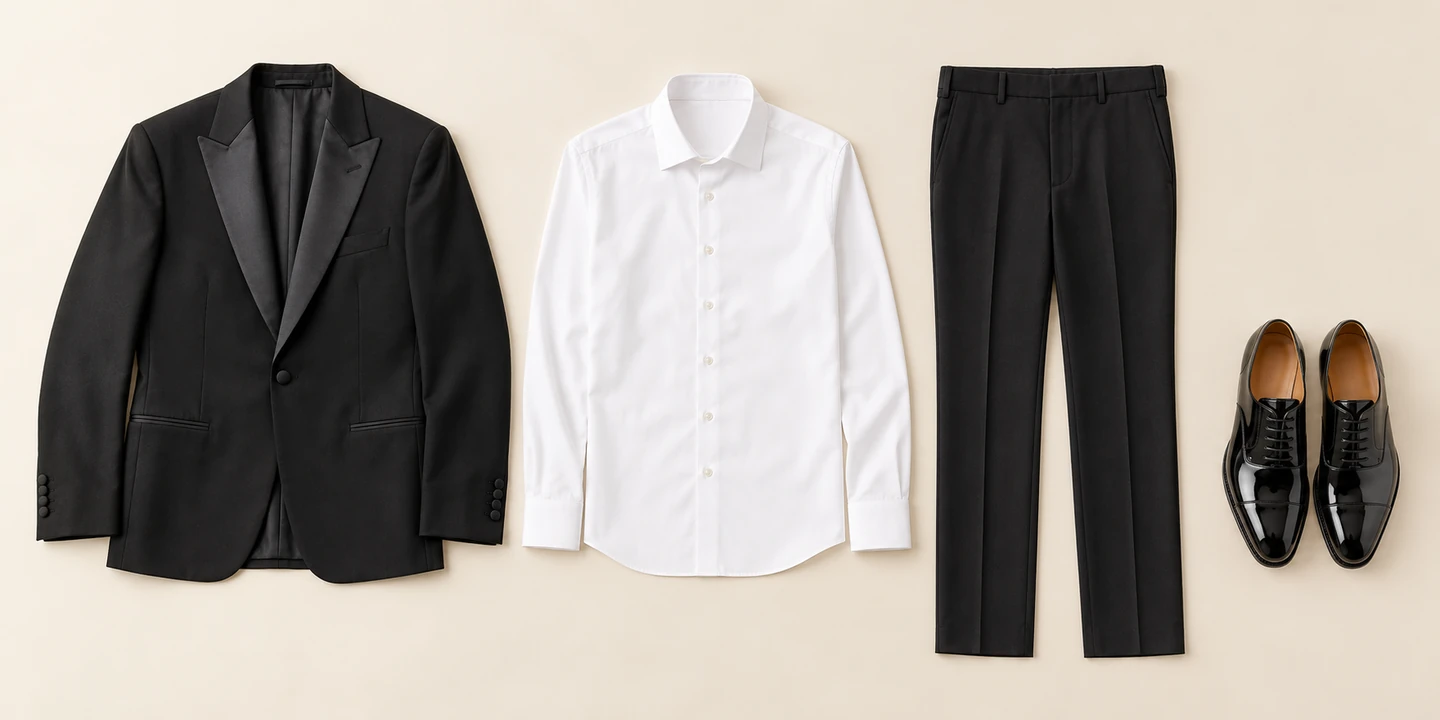
- White formal shirt
- Black tuxedo jacket
- Black matching trousers
- Black patent dress shoes
Black tie attire for women
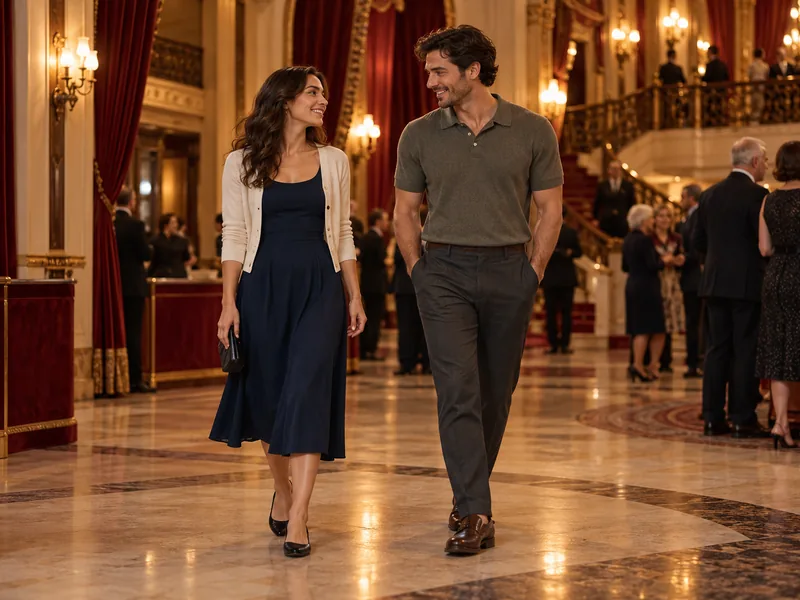
Emily Post's black tie attire options include a full-length evening dress, an elevated cocktail dress, and a particularly dressy black dress. Its guidance therefore does not restrict every choice to a floor-length gown. Source
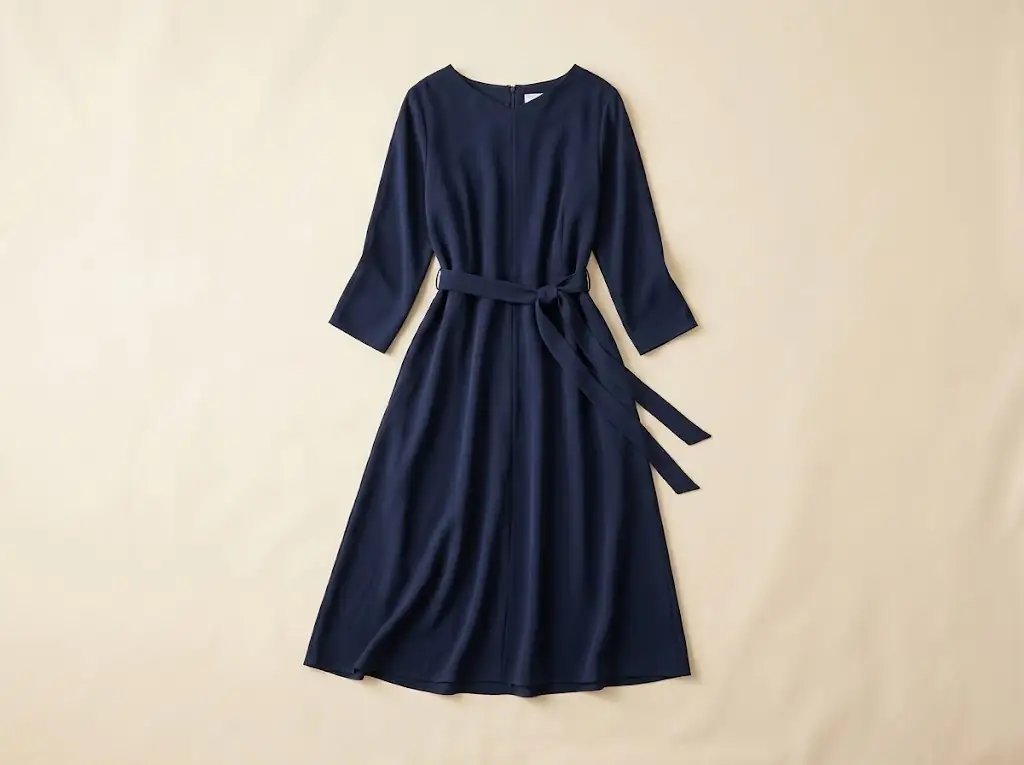
We suggest a burgundy evening gown with black dress shoes as one starting combination. Navy or black can be another personal choice, subject to the host's actual instructions. The colors illustrate an outfit rather than a universal palette. Choose a dress you can sit, walk, and move in, then try it with your intended underwear, shoes, and any evening layer.
Long gowns, cocktail dresses, and asking about trousers
For black tie attire with a shorter dress, we suggest treating the whole outfit as the decision: fabric, finish, shoes, and accessories all deserve attention. Do not assume that a daytime dress becomes the same choice simply by adding one item of jewelry. If you are uncertain about a particular dress, ask the host using a clear description or photograph of your proposed outfit.
If you prefer trousers or a jumpsuit, ask about that option specifically. Emily Post mentions dressy separates under its optional guidance; we do not use that as proof that every strict black-tie invitation accepts your chosen trouser outfit. Asking preserves your preferred clothing route without inventing permission or a blanket ban.
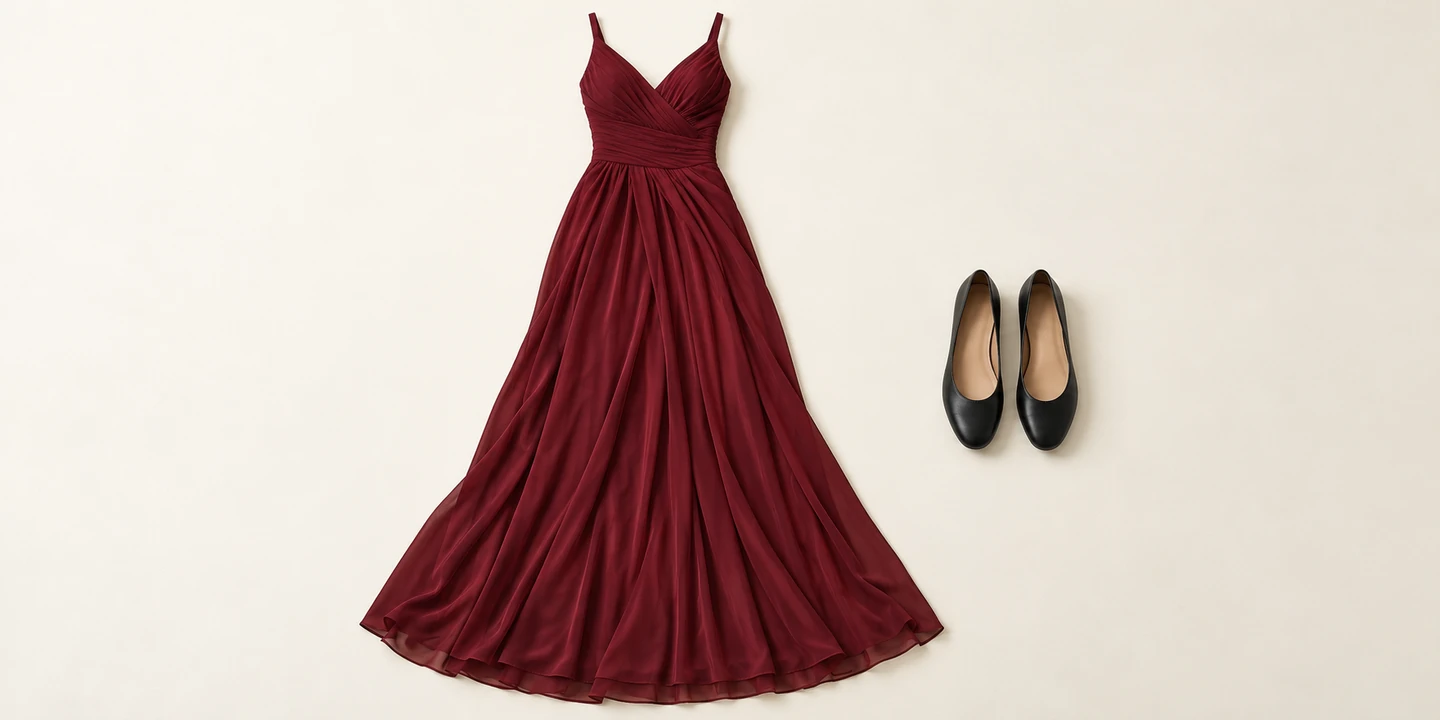
- Burgundy evening gown
- Black dress shoes
Black tie optional and creative black tie
These phrases should not be folded into one answer about black tie attire. Emily Post distinguishes an optional invitation, which offers a dark-suit alternative and includes dressy separates, from a creative invitation, which retains a formal base while allowing more individual styling. Source
We suggest using the exact wording to decide your next step:
| Invitation wording | Starting approach | What to clarify |
|---|---|---|
| Black tie | Plan from the tuxedo or evening-dress guidance above | Ask about a specific alternative before assuming it is accepted |
| Black tie optional | Choose among the source's formal options and stated alternatives | Check any additional host instructions |
| Creative black tie | Keep the formal base and consider a personal detail | Ask how the theme applies if the invitation does not explain it |
On a narrow screen, scroll the table sideways.
The starting approaches in this table are our planning suggestions using the source's distinctions. They are not a score for different occasions. For creative black tie attire, we suggest choosing one intentional detail first, such as an accessory, and checking that the rest of the outfit still follows the requested level of dress.
We do not automatically read preferred, encouraged, requested, or required as optional. If the wording is unclear, describe your proposed outfit when you ask the host.
Colors, shoes, and finishing the outfit
Black tie attire does not need to mean an all-black outfit: the source's basic tuxedo guidance includes a white shirt. Source
For our dress examples, black, navy, burgundy, and a silver accessory are possible choices, not a list of colors accepted at every event. If the host specifies a color, theme, or wedding-party outfit, check how that instruction applies to you. We do not maintain a universal forbidden-color list for all invitations using this dress code.
We suggest trying your shoes with the finished outfit and checking the route, steps, and any planned dancing. Choose an evening layer you can wear or carry comfortably. Check hems, closures, and the things you need to bring without assuming you must buy a full set of new accessories. A complete, comfortable plan is more useful than an unused item chosen solely because it looks formal on its own.
Our dress and accessory color examples
- BlackOur dress or accessory example
- NavyOur dress example
- BurgundyOur evening-gown example
- SilverOur accessory example; flat fill does not show metallic finish
What not to wear to a black tie event
For black tie attire, we suggest setting aside jeans, workout clothes, casual T-shirts, and everyday sneakers as default choices. This is our practical starting advice, not a claim about penalties or guaranteed refusal at every venue. If you need an alternative for comfort or accessibility, ask the host or venue about your specific situation.
If unsure about a kilt, hijab, western outfit, or boots, describe the complete outfit and ask, "Does this match the invitation's dress code?"
Avoid treating a plain black suit as a tuxedo without checking the invitation, or assuming optional and creative mean the same thing. We also suggest avoiding an outfit that needs constant adjustment when you sit or walk. Do the full try-on before the event, so a clothing decision does not depend on a last-minute guess.
What to wear to a black tie wedding
Use black tie attire to choose the clothing level, then check the couple's instructions for this particular celebration. We suggest a complete tuxedo outfit or a formal dress route from the sections above, adjusted to any specific request addressed to you. This does not make every wedding a black-tie event.
For an outdoor route, try the intended shoes and layer without silently changing the dress code. If the invitation says optional or creative, use that wording rather than importing the strict version. General wedding roles, colors, and other wedding etiquette need their own guidance; this section focuses on translating the stated clothing request into an outfit you can prepare.