01
What semi-formal means on an invitation
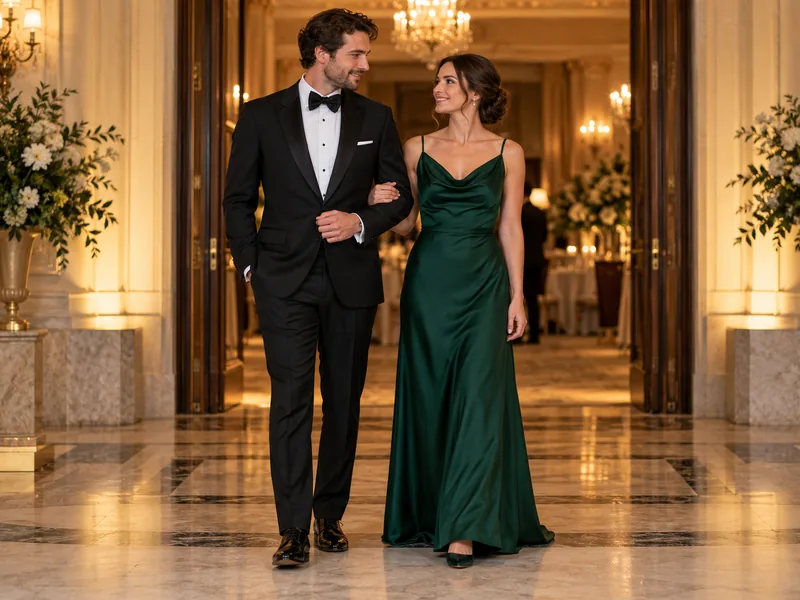
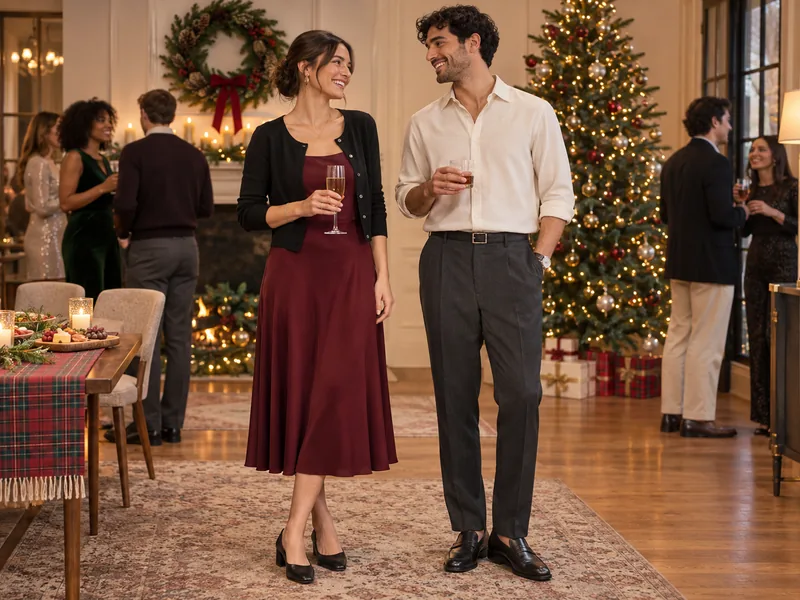
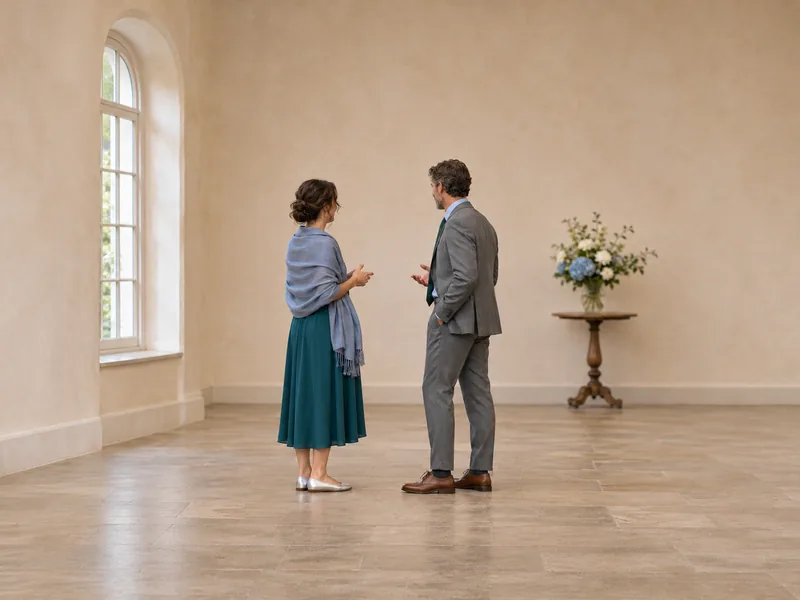
Semi formal attire calls for a deliberate occasion outfit. Start with the overall finish rather than a single item: the cut of the clothes, the material, the shoes, and how the pieces work together. A dress worn with beach flip-flops and the same dress worn with a cropped jacket and polished pumps create different results.
The Emily Post attire guide lists dresses and dressy separates for women; its men's semi-formal list includes a dark suit, shirt, tie, leather dress shoes, and dark socks. We use that as a conservative general-event reference.
The setting still matters. The Knot's wedding-specific guide allows more flexibility with suit separates, jackets, and ties. That difference is useful context when you see semi formal attire on a wedding invitation; keep the wedding's details with that advice rather than applying it to every occasion.
02
Semi-formal vs cocktail, formal, and casual
Use this comparison to organize an outfit, then build around the row that matches your invitation. Choose tailored pieces and polished shoes as a dependable base.
| Wording | How to approach the outfit | Practical direction |
|---|---|---|
| Casual | Choose neat everyday pieces for the activity | Keep the outfit relaxed and functional |
| Dressy casual | Refine everyday separates | Upgrade the fabric, top, or shoes |
| Semi-formal | Build a complete dressed-up combination | Dressy dress or separates, or a matching suit |
| Cocktail | Give the outfit a party-focused finish | Use a refined silhouette with a deliberate evening detail |
| Formal or black tie | Establish the exact eveningwear expectation | Resolve the stated code before selecting suit or gown options |
On a narrow screen, scroll the table sideways.
Cocktail and semi-formal can share garments. Use styling to create the difference you want: a daytime dress with restrained shoes, or a simple evening outfit with a richer texture. Do not assume that changing the label forces you to replace everything in your closet.
“Formal/semi formal attire” needs clarification because it names a range. Ask whether the host expects an ordinary suit or eveningwear, and describe the dress or separates you have planned. Keep a matching jacket with your outfit while resolving that question; it gives you a more finished option without introducing another clothing category.
03
Build a semi-formal outfit: dresses, separates, and suits
Women: dresses and separates
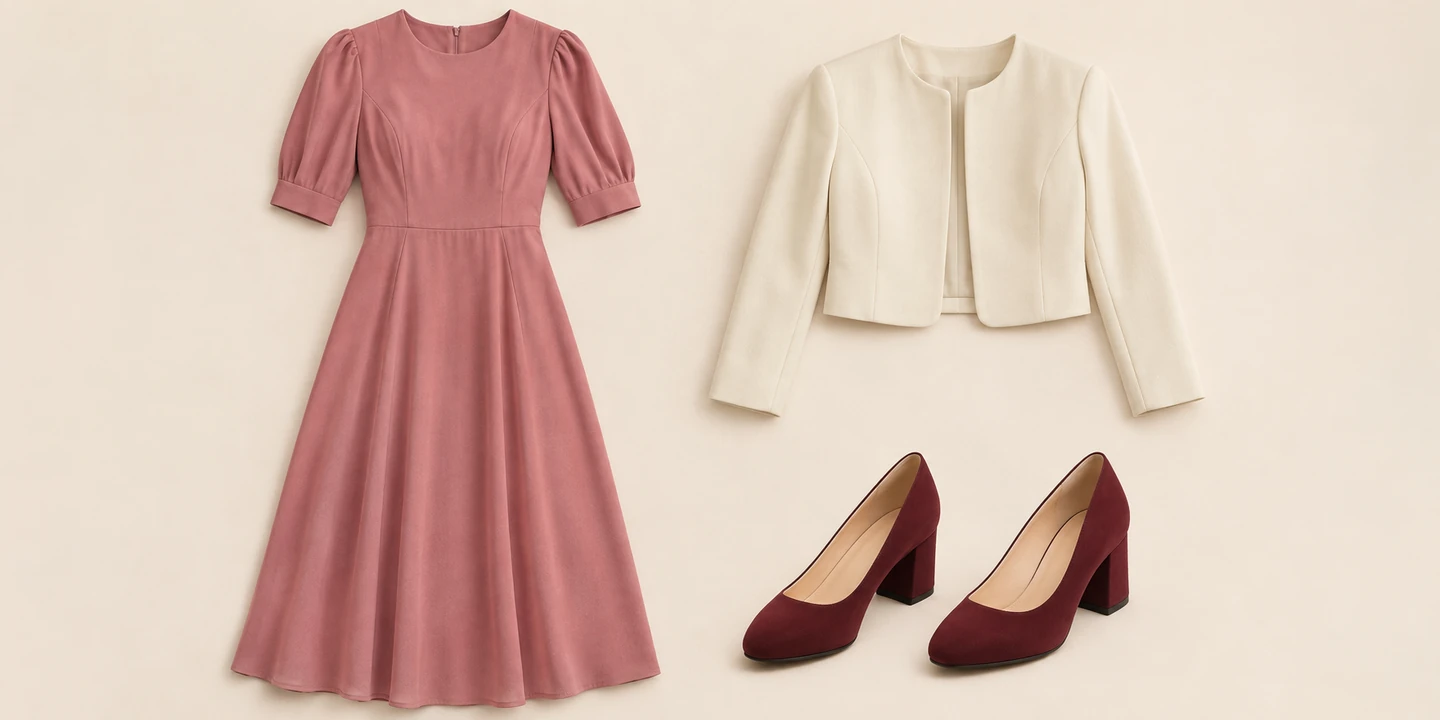
Our daytime semi formal attire example combines a dusty-rose midi dress, an ivory cropped jacket, and burgundy closed-toe block heels. Choose a dress that hangs smoothly while standing and sitting. Keep the jacket short enough to show the dress's shape, and use the burgundy shoes as the single deeper accent.
Pants work as part of semi formal attire when the whole combination is dressed up. Choose plum dressy wide-leg trousers, a champagne long-sleeve blouse, and black pointed flats. A fluid blouse gives the tailored trousers a softer counterpart; the pointed shoe keeps the hem and footwear visually connected. Set the trouser length with the shoes you will actually wear so the fabric clears the ground.
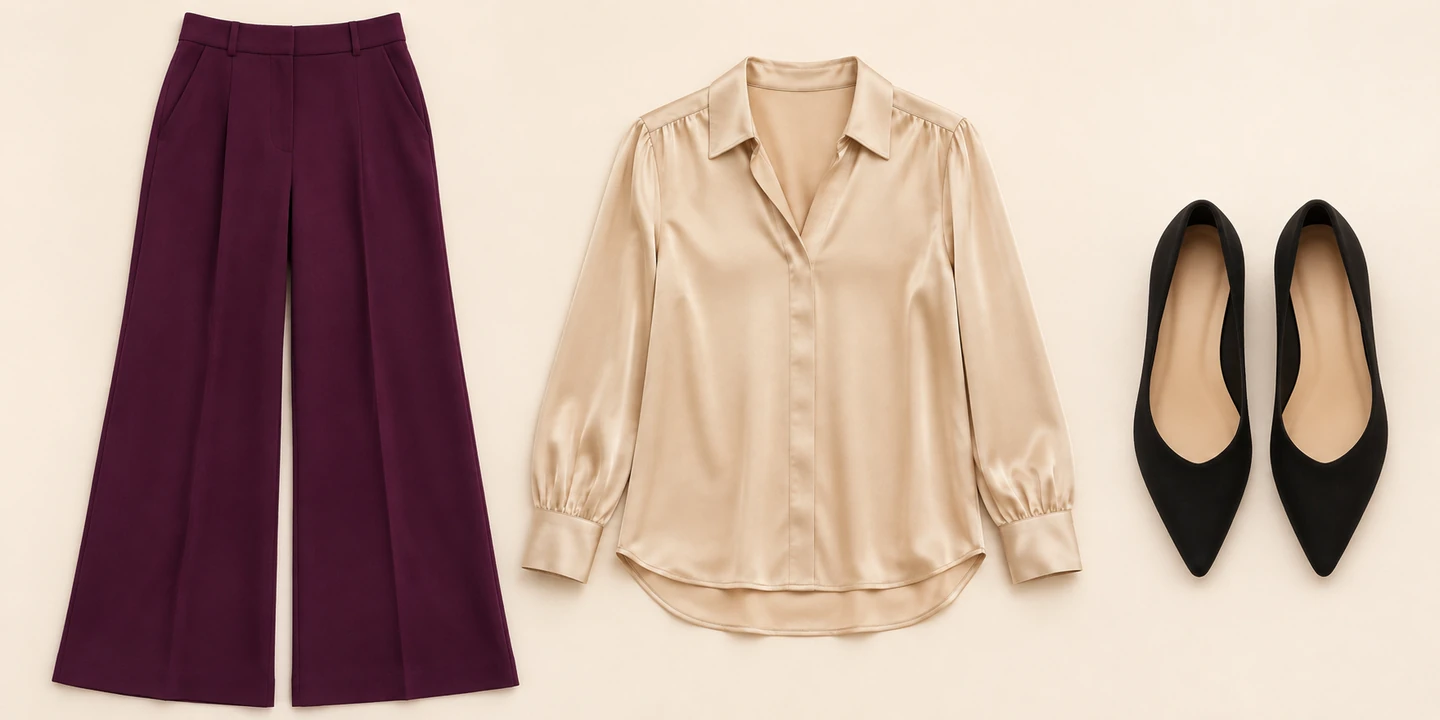
A jumpsuit is another practical route. Choose a defined waist or a clean straight shape, then add a refined shoe. With either trousers or a jumpsuit, sit, bend, and walk before the event. Fix pulling fastenings or a dragging hem before adding accessories.
Use the same clothing choices and fit checks when choosing semi formal attire in plus sizes. Pick the cut that gives you room to move, then decide where you want definition: a shaped waist, a straight trouser leg, or a clean jacket shoulder. A larger size does not require a separate dress code or a list of features to hide.
Men: suits, shirts, and ties
A dark-brown matching suit, pale-blue dress shirt, burgundy tie, dark-brown leather derbies, and dark-brown socks make our conservative men's semi formal attire combination. The matching jacket and trousers establish the outfit; the shirt and tie add contrast without another pattern to manage. Wear socks long enough to keep a continuous line when seated.
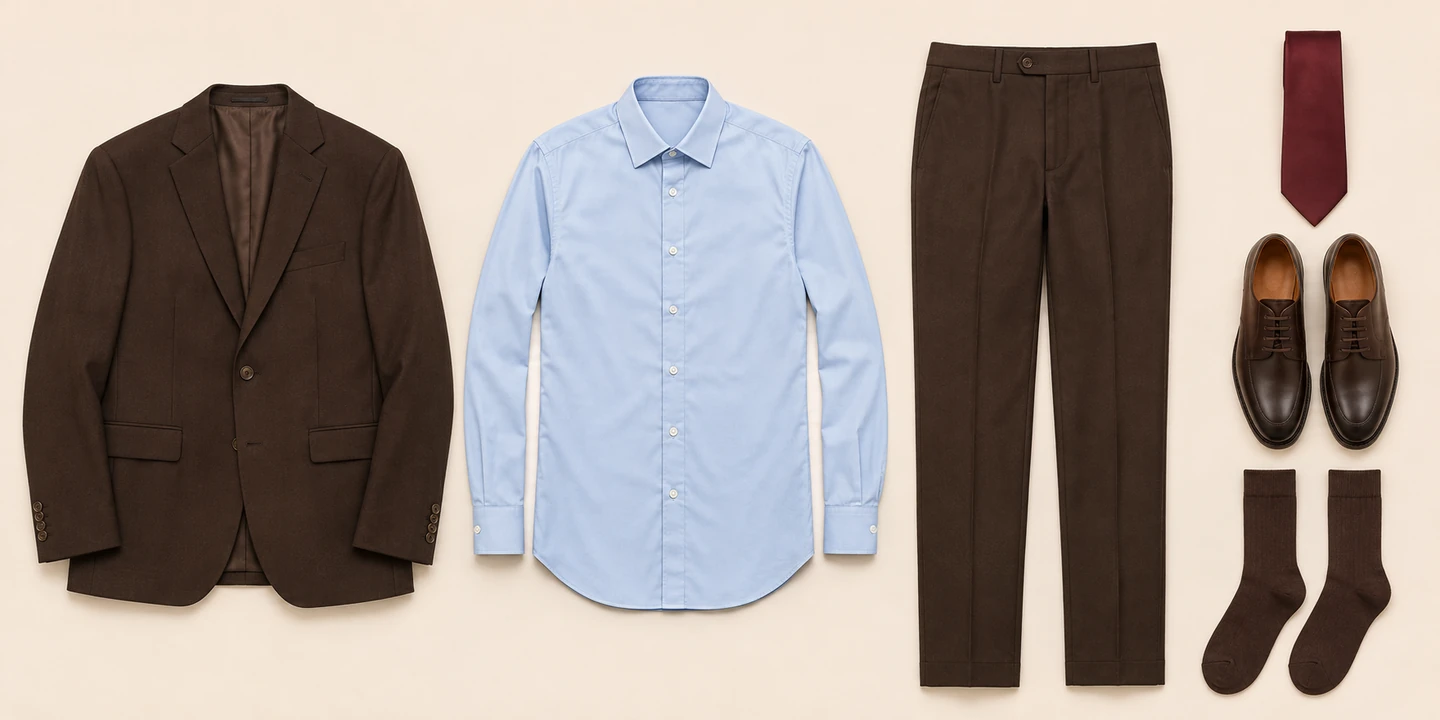
Choose a jacket that lets you reach forward comfortably. Button the shirt collar before assessing the tie, and sit in the trousers before deciding that the waist fits. Polish the shoes and remove lint from the jacket. Make these finishing tasks the priority before adding a vest or decorative accessories.
Suit separates need a deliberate relationship between jacket and trousers. If you are unsure about that pairing, use the matching suit above. A tie is our default for a general semi-formal event; the Grinnell College guide also advises wearing one when uncertain.
04
Match the outfit to the occasion, day, and season
Daytime and evening
Keep the daytime outfit light in construction: a smooth dress, a refined blouse, or a suit with a clear, uncluttered line. For evening, choose a richer color or texture and a more finished shoe. Burgundy, forest green, plum, and dark brown give the examples here different moods without making every outfit black.
The Grinnell guide recommends a dressier approach at night and climate-appropriate materials. Use that general direction, then adjust the actual layers to the place you are going.
Warm and cold weather
In summer, choose breathable, lighter-weight fabric and avoid stacking layers you will immediately remove. For a suit, select a lighter-weight version with enough room to sit comfortably. For a dress or trouser outfit, favor a fabric that falls cleanly rather than one that needs constant rearranging. Keep the same level of finish in the shoes.
A cold-weather outfit needs an outdoor layer that fits over the indoor clothes. Pair a forest-green knee-length dress with a camel wool coat, black opaque tights, and black low block-heel pumps. The coat supplies the outer layer; the dress, tights, and shoes still form a complete outfit after you remove it.
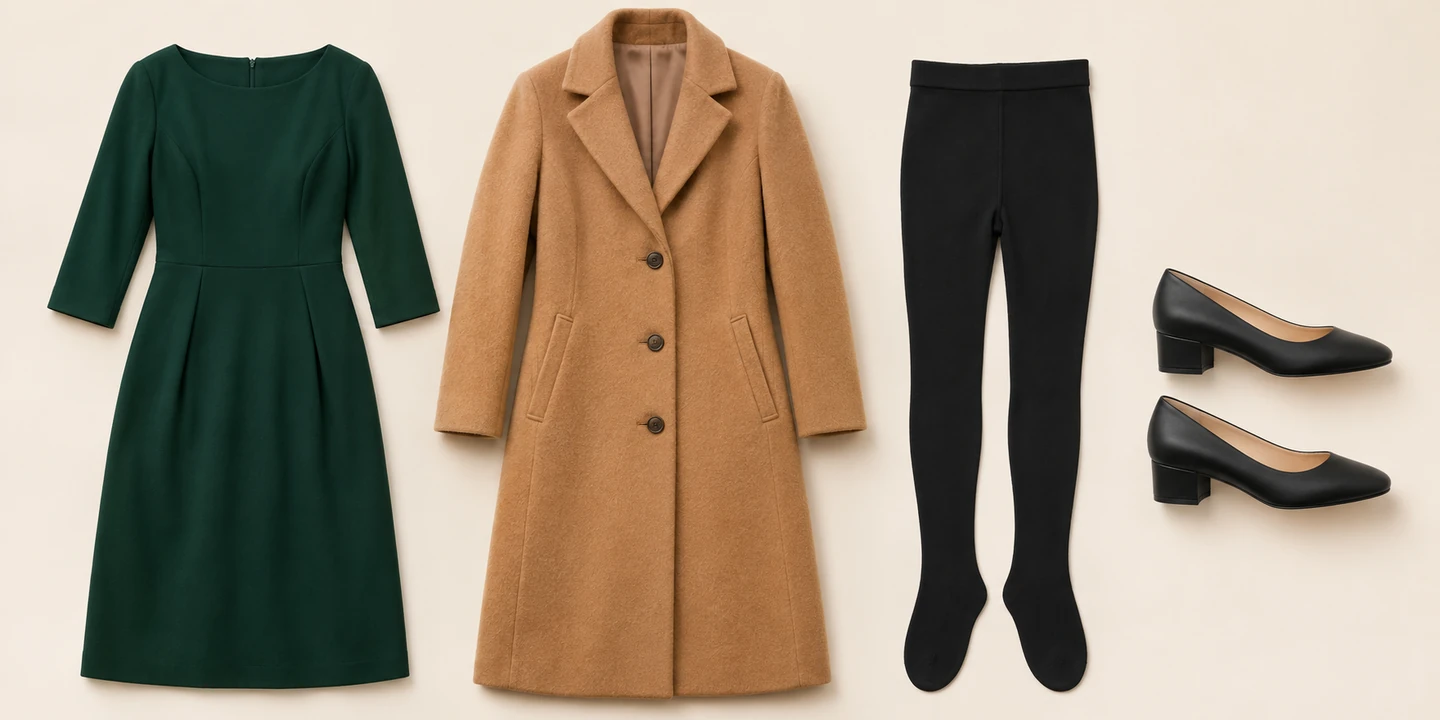
Use a coat with enough shoulder and sleeve space over a jacket. If the trip involves a long walk, wear practical travel shoes and change on arrival. Plan where to put them so your event outfit stays simple to manage.
Parties, dinners, and work-related events
At a party or seated dinner, choose one of the complete combinations above and adjust its warmth and footwear for the setting. For a work-related celebration, keep the same tailored base and choose a neckline and fit you can move in comfortably around colleagues.
Wedding invitations add ceremony and guest-etiquette questions; a job interview adds employer and role expectations. Keep those tasks separate. Semi formal attire is not an automatic answer to every interview, and this general guide does not replace a wedding-specific outfit plan.
05
Shoes, jeans, ties, and other borderline choices
Choose closed-toe block heels, refined flats, or leather dress shoes for the examples here. Heels are optional in our styling plan: the plum trouser outfit is complete with pointed flats. Match the trouser hem to your heel height, and choose shoes that stay secure while you walk.
Skip jeans when building semi formal attire from this guide. Use dress trousers instead, even if the jeans are dark and new. Skip graphic tees, beach flip-flops, and athletic shoes for the same general-event default. A plain piece still needs the right fabric and context; removing a logo does not finish an outfit by itself.
The Grinnell guide advises against sneakers and T-shirts, while The Knot's wedding guidance includes dressy leather sneakers and makes ties optional. Those are different approaches to different settings. Our default for general semi formal attire is the leather dress shoe and tie combination above.
Treat a polo or an outfit without a jacket as a specific relaxed-event choice, rather than the starting point for an unclear invitation. Begin with the suit and shirt, then resolve the one item you want to change. Avoid upgrading only the shoes while leaving the rest of the outfit in everyday casual clothes.
06
Semi-formal questions answered
What is considered semi-formal attire?
Choose dressed-up clothing with a complete finish: a dressy dress, refined separates, or a suit with a dress shirt. Our semi formal attire examples show both dress and trouser routes, with polished shoes completing each.
What not to wear to a semi-formal event?
Skip jeans, graphic T-shirts, beach footwear, and athletic shoes in our general-event plan. Replace the casual base piece first, then finish the outfit with the appropriate shoe.
How to dress semi-formal for ladies?
Start with the dress or trouser shape you enjoy wearing. Add a refined layer or blouse and polished shoes; the pointed-flat option keeps semi formal attire practical without requiring heels.
What to wear if the dress code is semi-formal?
Use a complete combination: a dusty-rose midi dress with an ivory cropped jacket and burgundy block heels; plum dress trousers with a champagne blouse and black pointed flats; or the dark-brown suit with a pale-blue shirt and burgundy tie. These semi formal attire examples give you a full outfit to assemble. Choose its warmth and footwear for the setting, and keep the finished outfit easy to sit and walk in.
Can I wear jeans in semi-formal?
Choose dress trousers instead for our semi formal attire default. Keep the dark denim for an invitation that explicitly calls for a more casual outfit.