01
Read the invitation: identify the wedding dress code
Find the clothing instructions on the invitation or wedding website before choosing a color. A beach location describes the setting; black tie describes the level of dress. You need both pieces of information to decide what to wear to a wedding without buying an outfit for the wrong occasion.
Emily Post's wedding guest attire guide distinguishes daytime and evening celebrations and their levels of formality. Use this short comparison to identify your starting point; the outfit examples below are our practical suggestions.
| Invitation wording | Starting point | Decision to make next |
|---|---|---|
| Black tie | Eveningwear, such as a tuxedo or formal evening dress | Check the invitation's specific guidance |
| Formal | A distinctly formal dress or dark suit | Clarify any black-tie-optional wording |
| Cocktail | A dressy party outfit or suit | Choose the fabric and accessories for the setting |
| Semi-formal | A dressy dress, separates, or suit | Adjust shoes and layers for the venue |
| Casual | A neat, intentional outfit | Check what casual means to these hosts |
On a narrow screen, scroll the table sideways.
No dress code listed
Check the wedding website and practical details first. If the wording still leaves you unsure, ask the couple or a designated contact whether they expect suits, cocktail outfits, or something more relaxed. A hotel ballroom and an afternoon garden ceremony offer clues, but neither settles the question on its own.
While you wait for an answer, build two options from clothes you own. Put a dressy midi dress beside a tailored trouser outfit, or compare a full suit with a jacket and contrasting trousers. This makes a later decision about what to wear to a wedding quicker and keeps a vague invitation from turning into an unnecessary shopping trip.
02
Use the venue and ceremony to narrow your outfit
Indoor, garden, beach, and destination settings
Read the itinerary for the parts where you will walk, sit, and stand. Our approach to an indoor ceremony is to choose the main outfit first and add a separate travel layer. For a garden reception, start the shoe decision with the actual walking surface. Broad heels or polished flats give you a practical alternative to narrow heels on grass.
For a beach celebration, check whether the ceremony is on sand, a deck, or a paved terrace. Choose footwear for that surface, then keep the clothing at the requested level of dress. A flowing dress does not automatically make an outfit casual, and a seaside address does not automatically make sandals appropriate.
Destination travel adds a packing decision to what to wear to a wedding. Try the complete outfit before packing, including the shoes and outer layer. Hang it on arrival and check the care label before steaming or ironing. Keep a small bag available for the event itself so your travel tote does not become part of the outfit by default.
Ceremony and cultural requests
The Knot's wedding guest guide recommends using the dress code, venue, and event details together. Read any ceremony-specific clothing guidance as carefully as the reception instructions. Ask about an unfamiliar request rather than treating a broad cultural label as a complete dress code.
For a ceremony that asks for covered shoulders, choose a jacket or wrap you can wear comfortably throughout the service. Try it with the neckline and sleeves before the day. Pack the requested piece with your event clothes, not at the bottom of a separate bag that might stay at the hotel.
03
Plan for the season and time of day
Spring and summer
For a warm outdoor celebration, our suggested combination is an ochre floral-print midi dress, rust low block heels, and a sage-green shawl. The print carries the outfit; the plain shoes and wrap keep the remaining colors simple. Wear the shawl over both shoulders when you need it and fold it into your bag when you do not.
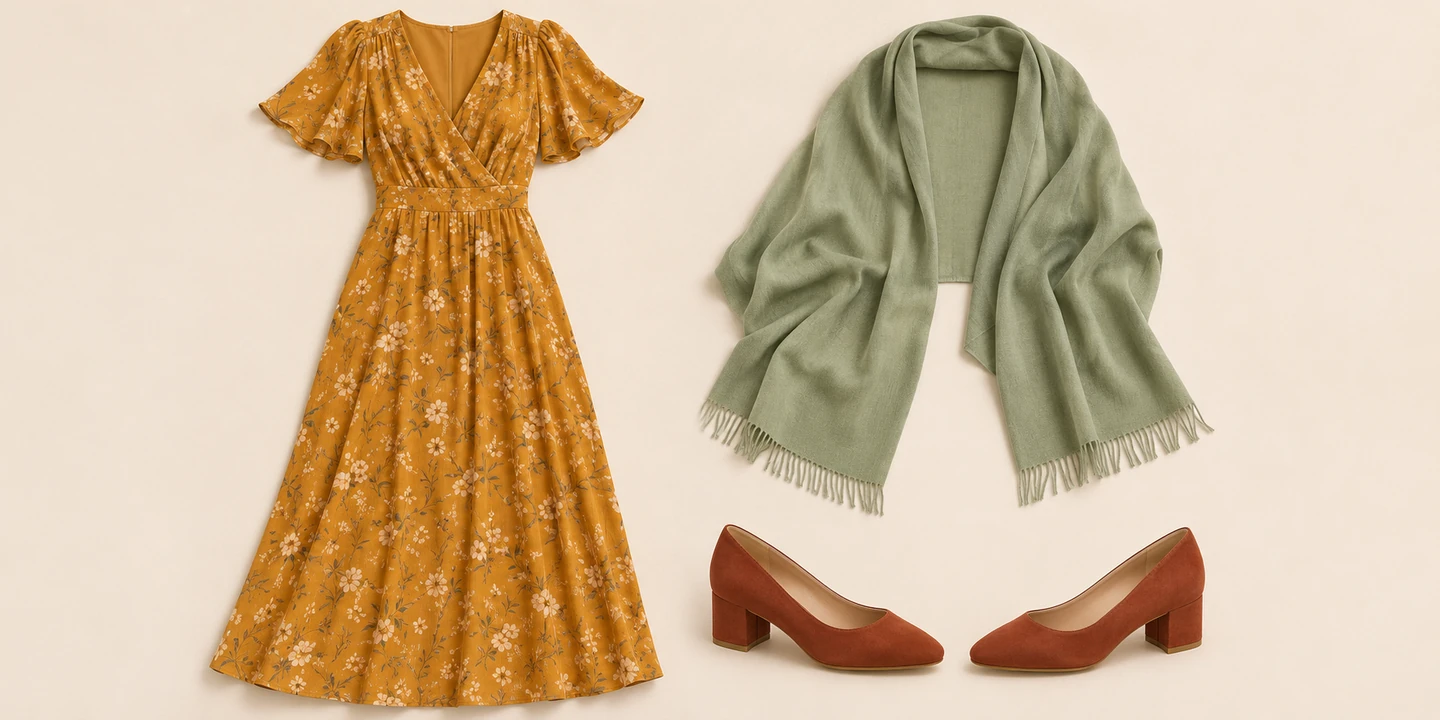
When planning what to wear to a wedding in warm weather, check the fabric's weight and lining rather than relying only on a fiber name. Hold the dress or shirt up to the light and try it with the underlayers you intend to wear. Sit down, raise your arms, and check that the neckline and waist remain comfortable.
Fall and winter
Start with an outfit that looks complete indoors, then add a coat that covers it comfortably. A plum dress with dark-brown closed-toe shoes and a charcoal coat is one option. For a suit, try a wool jacket and matching trousers with a dress shirt, then check that the coat fits over the jacket without pulling across the shoulders.
Cold-weather planning should include the route between the ceremony and reception. If you are changing from travel footwear into dress shoes, arrange where the spare pair will stay. Plan that change before the day, especially when the schedule involves several locations.
Daytime and evening
Use time of day to refine an outfit within the stated dress code. Our daytime suggestion is a softer color combination with restrained accessories; for evening, try deeper colors or a fabric with a subtle sheen. Keep the invitation's level of dress intact rather than treating sunset as an automatic change of dress code.
04
Choose a guest outfit: dresses, separates, and suits
Dresses and dressy trousers
A dress is one route to a complete outfit, not the only one. Emily Post's wedding attire suggestions include dressy pants outfits. For our trouser option, pair fluid dark-green trousers with a rose-pink blouse, refined flats, and a compact bag. Keep the blouse clearly pink if you want to avoid a nearly white appearance in photographs.
If you prefer a dress, choose a neckline and hem you can wear comfortably while seated. Check the back as well as the front with your planned underlayers. A simple dress with deliberate shoes and a well-fitting layer answers what to wear to a wedding more effectively than accessories added to disguise an uncomfortable fit.
Suits and separates
Our suit example combines an olive-green jacket and matching trousers with a lavender shirt, burgundy tie, dark-brown leather derbies, and dark-brown socks. The matching jacket and trousers establish the outfit; the shirt and tie add contrast without requiring another patterned piece.
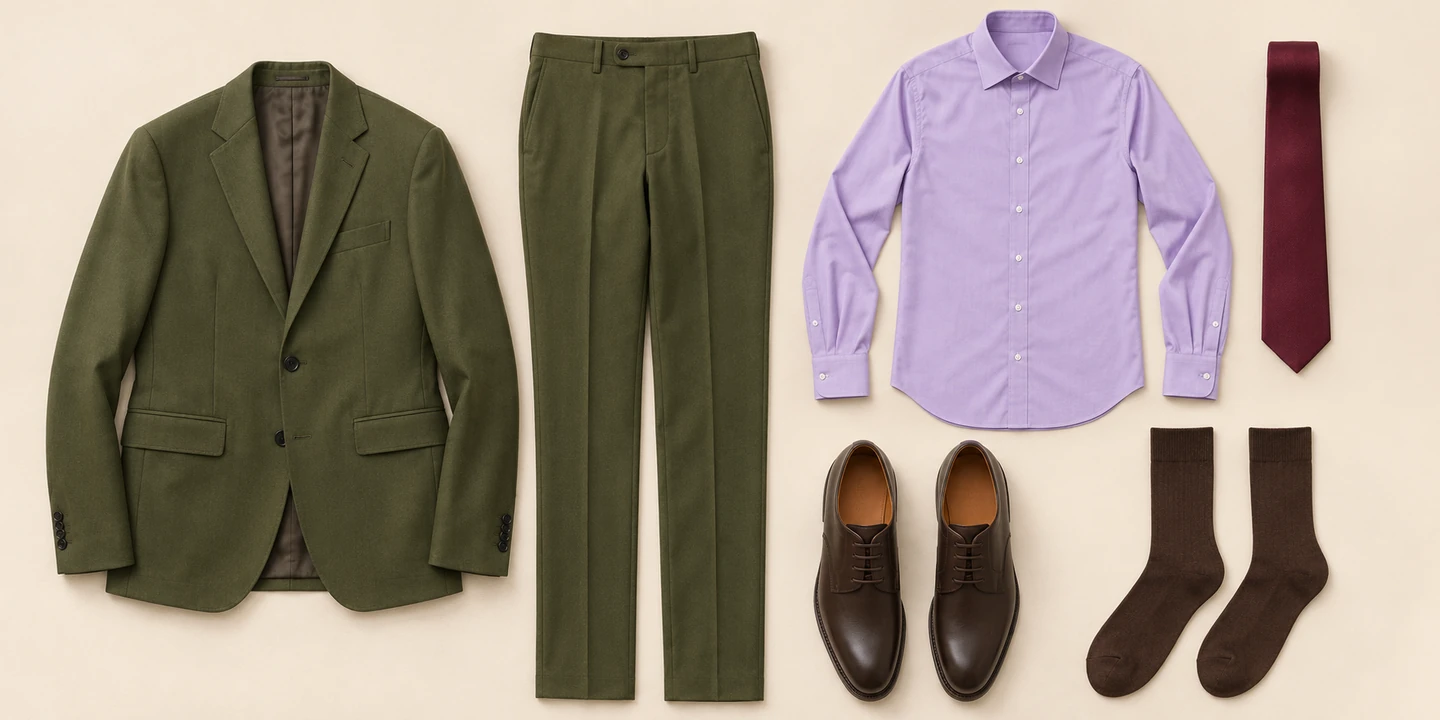
Try the jacket buttoned while standing and unbuttoned while sitting. Check the trouser hem with the actual shoes, then look at the shirt collar with the tie in place. These checks help you choose what to wear to a wedding from pieces that work together, rather than judging each item on its hanger.
For an invitation that explicitly says semi-formal, use wedding-specific outfit guidance to settle details such as separates and ties. For formal or black-tie wording, resolve the dress code before adapting this olive suit example; the color alone does not establish its suitability.
05
Can you wear black to a wedding? Colors and courtesy
Yes, black is an option for many contemporary weddings. Vogue's guide to wearing black as a wedding guest supports the choice while emphasizing the occasion and dress code. That does not replace a couple's color request or ceremony guidance.
For a dressy evening option, our example is a black jumpsuit, pomegranate-red low pumps, and an antique-gold small bag. Choose a jumpsuit with a defined waist and a fabric that holds its shape. The red shoes provide one clear accent; the small metallic bag finishes the combination without adding another strong color.
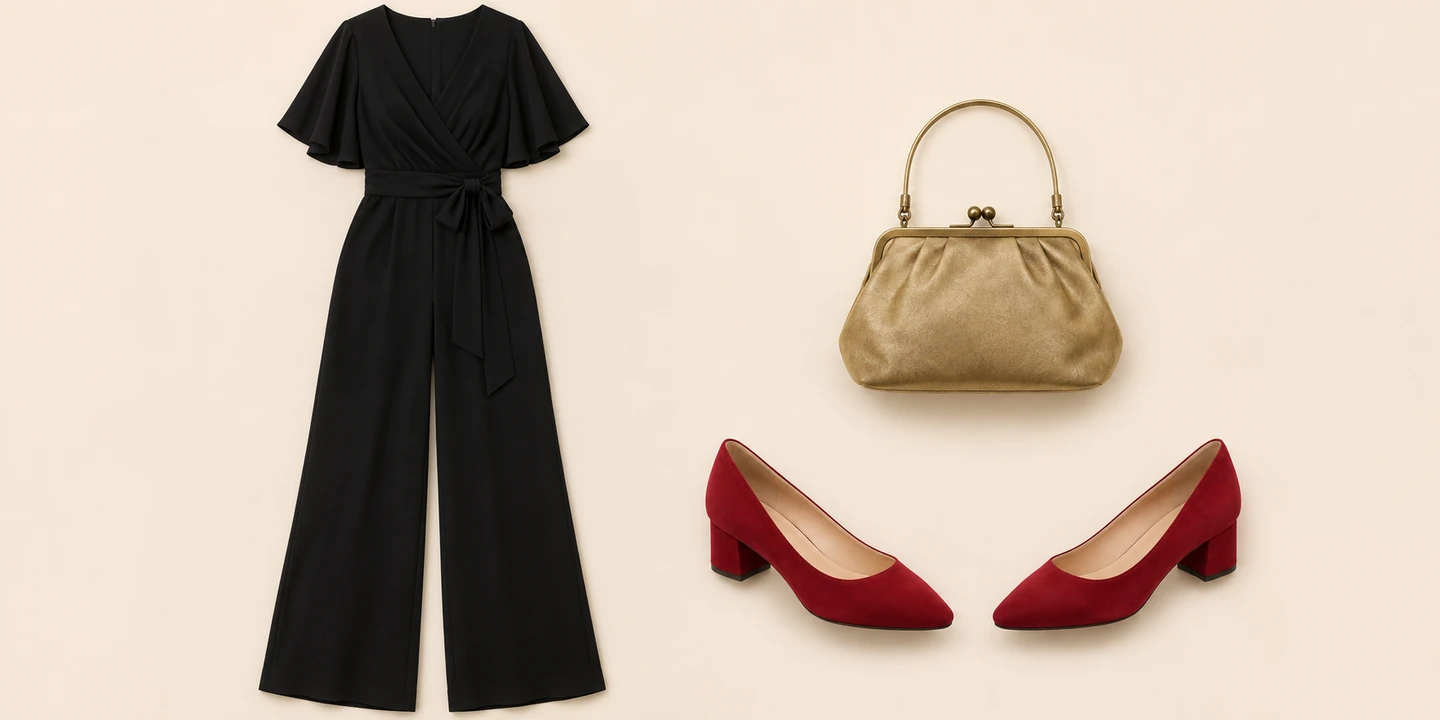
When deciding what to wear to a wedding, separate the color question from the formality question. A black cotton day dress and a black evening gown serve different invitations. Changing only the color of an outfit will not correct a mismatch with the dress code.
For white and near-white clothing, The Knot's guest guidance advises avoiding primarily white outfits unless the couple requests them; it allows a white shirt under a suit or tuxedo. Our practical approach is to choose an unmistakable color when a pale dress looks bridal or reads nearly white. Check prints as a whole, including their background, rather than assuming a few colored flowers settle the question.
06
Finish with comfortable shoes and practical layers
Put the entire outfit on, including socks or hosiery, and walk around before the event. Check heel movement, toe room, and whether the hem catches on a shoe. Clean and polish leather footwear; check straps and fastenings on flats or heels. Use the shoes you actually plan to wear for every fitting decision.
For trousers and dress shoes, choose socks deliberately. Our olive suit uses dark-brown socks to continue the shoe color, while a different suit could use socks close to its trouser color. For a dress, try any hosiery with the shoes before deciding on the final hem and color balance.
Choose a wrap or jacket that works while worn, not just when draped over a chair. A wrap that constantly slips or a coat that crushes the sleeves adds friction to an otherwise settled outfit. Finish planning what to wear to a wedding by packing the small items you need into your event bag and checking that it closes comfortably.
07
Wedding guest questions answered
What should I wear to a wedding as a guest?
Match the invitation's dress code, then choose a complete outfit for the venue and season. Start with a dressy dress, elegant trouser outfit, or suit as appropriate to that code. Check the shoes, layer, and fit together. The sections above give you a sequence for deciding what to wear to a wedding when several options seem plausible.
Is it impolite to wear black to a wedding?
Black itself is not a universal sign of disrespect; Vogue's wedding guide treats it as a wearable guest option. The couple's stated preferences still matter. If their instructions exclude black, choose another color; if they request black, build the outfit around it.
What colors should a guest not wear to a wedding?
Start with any colors the couple specifically requests or excludes. For a wedding without special color instructions, follow the white and near-white caution above. Choose a clearly guest-appropriate outfit and resolve any ambiguity before the day, especially if you are unsure how a very pale color will look in person.