01 / Employer & role
Match your interview outfit to the employer and role
Read the interview invitation for clothing guidance and the day's activities. Then look at the actual team, workplace, and role. A client meeting, a desk-based conversation, and a practical assessment raise different clothing questions, even within one organization.
The University of San Francisco's Dress for Success guide recommends researching the company and asking a contact about suitable attire. Use that information to narrow your choices. A bank, law firm, school, or technology company is a starting clue, not a complete dress code.
Unknown dress code
Ask a concrete question: “Would a suit be appropriate for this interview, or would you recommend business-casual clothes?” If the day includes a tour or task, include that in the question. An answer tied to your appointment is more useful than guessing from an industry label.
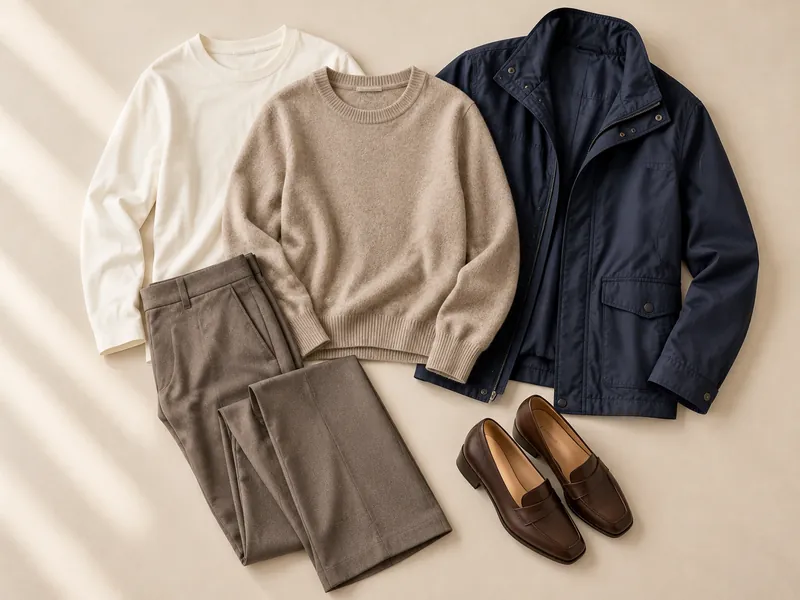
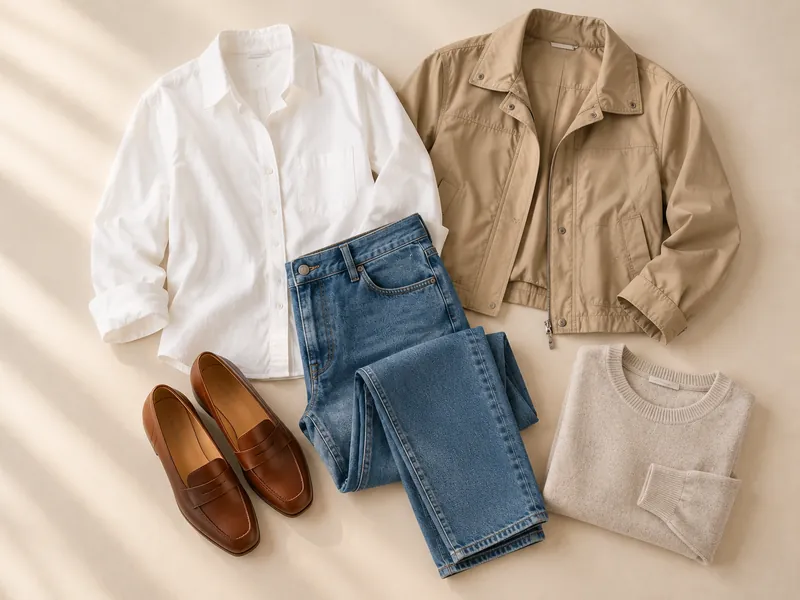
Meanwhile, assemble two options: a matching jacket and trousers with a shirt, and a neat shirt or blouse with separate trousers. Try both with the shoes you own. This turns the question of what to wear to a job interview into a choice between ready outfits rather than a last-minute search for individual pieces.
02 / Choose formality
Choose an outfit for formal, business-casual, or casual workplaces
USF's career-services guide distinguishes business professional, business casual, and smart casual. The table translates those broad categories into our outfit suggestions. Use it to organize what to wear to a job interview after establishing the employer's expectations.
| Interview setting | Complete outfit starting point | Detail to settle |
|---|---|---|
| Formal or business professional | Matching suit jacket and trousers, shirt or blouse, and polished leather shoes or refined flats | Whether a tie or other specific clothing is requested |
| Business casual | Tailored trousers or chinos, a collared shirt or refined blouse, and clean loafers or flats | Whether a jacket belongs with the expected level of dress |
| Explicitly casual | Neat trousers, a plain collared shirt or simple knit top, and clean shoes | Whether jeans or sneakers are suitable for the interview itself |
On a narrow screen, scroll the table sideways.
Choose the row that fits the appointment, then refine the fabric and fit. Social dress codes such as semi-formal are not a substitute for an employer's business-casual guidance. Keep partywear details out of the decision unless they happen to work with the actual workplace brief.
03 / Interview scenarios
First-job, restaurant, retail, and hands-on interviews
First adult job and a small budget
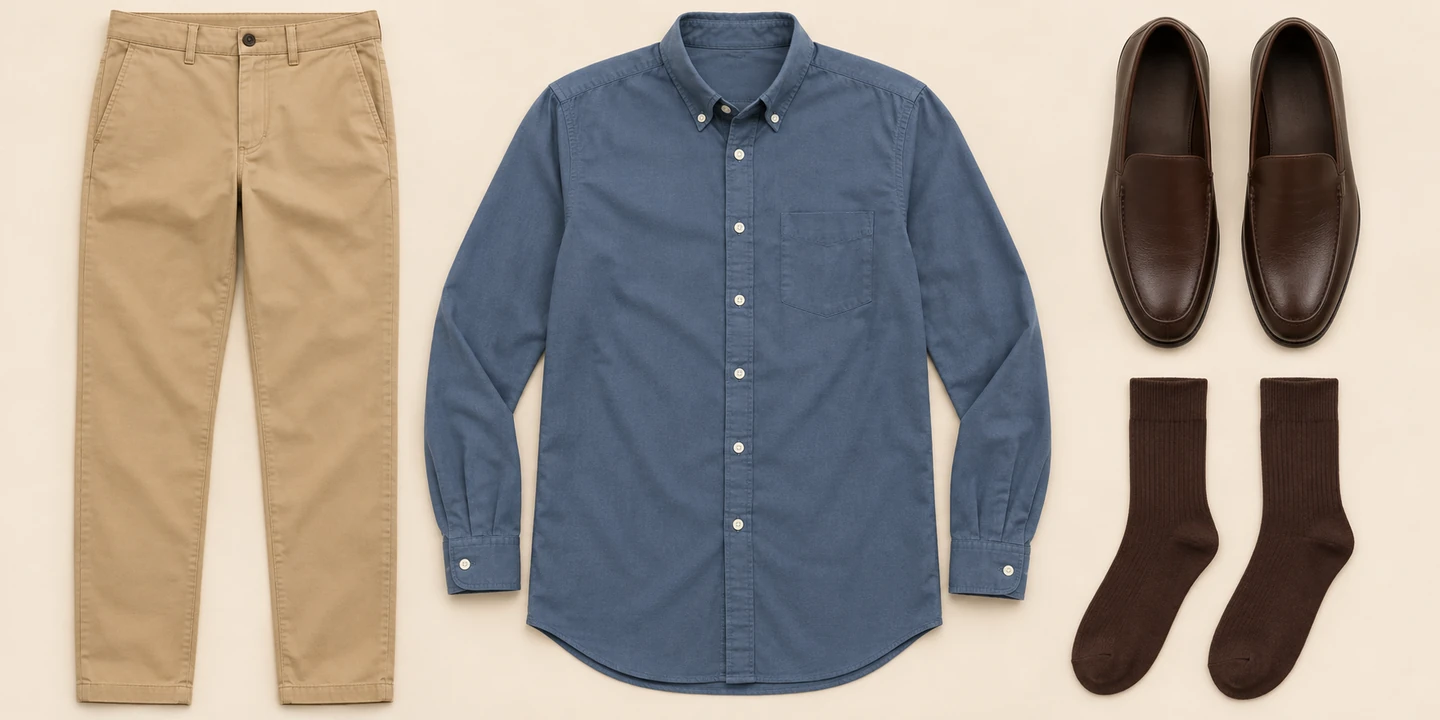
Start with your cleanest, best-fitting clothes. Our simple outfit is sand-colored chinos, a steel-blue button-down shirt, dark-brown loafers, and dark-brown socks. Press the shirt according to its care label and set the trouser hem with the shoes on. This gives you a complete business-casual combination without building an outfit around a new suit.
If you lack slacks, try neat chinos. If you lack a blazer and the interview is business casual, use a well-fitting collared shirt or blouse with tidy trousers. For a formal appointment, borrow a suitable jacket or suit if possible and allow time to try it on. Focus spending, if needed, on the missing piece rather than replacing everything.
Restaurants and retail
For an ordinary restaurant, cafe, fast-food, or retail interview, use the shirt-and-chinos combination as our starting suggestion. A more formal host-facing role could call for a jacket or suit; make that decision from the appointment details and workplace, not the restaurant's name alone.
Separate deciding what to wear to a job interview from choosing a work uniform. Being interviewed at a restaurant does not by itself mean you should arrive ready for a kitchen shift. Likewise, a casual shop floor does not settle how its hiring team wants candidates to dress.
Site visits or practical assessments
Find out whether you will be talking, touring, or doing a task. Princeton's interview-formats guidance notes that on-site arrangements can involve clothing suited to the setting, including special items such as a lab coat or closed-toe shoes.
For a warehouse, workshop, clinic, or other hands-on setting, obtain the actual clothing and footwear instructions before the visit. Ask whether any uniform or protective equipment is supplied. Keep the ordinary interview outfit ready for the conversation and plan any required change separately.
04 / Outfit options
Practical outfit options: trousers, skirts, dresses, and suits
Interview outfits for women
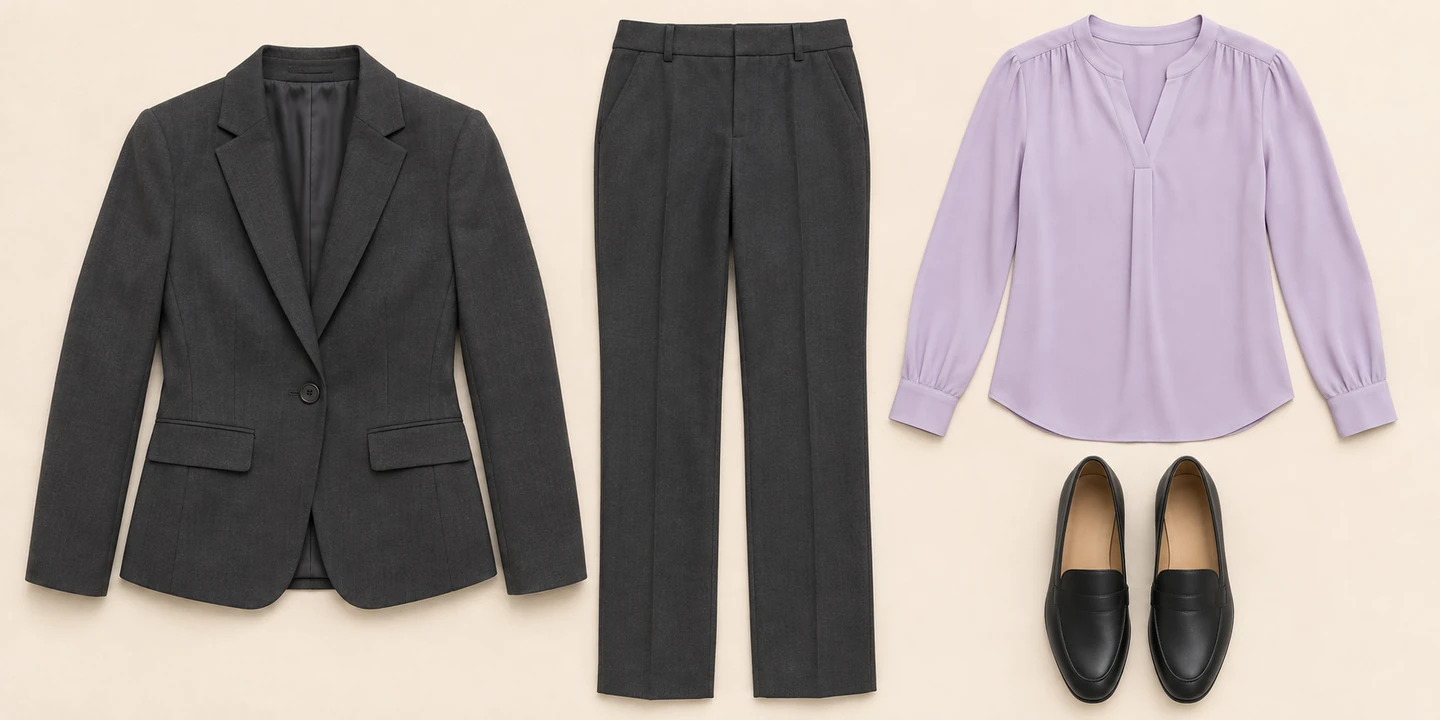
For a formal trouser outfit, choose a charcoal suit jacket and matching trousers, a soft-lavender blouse, and black leather loafers. The pale blouse adds contrast while the matching suit pieces keep the combination simple. Try the jacket over the actual blouse so the sleeves sit comfortably together.
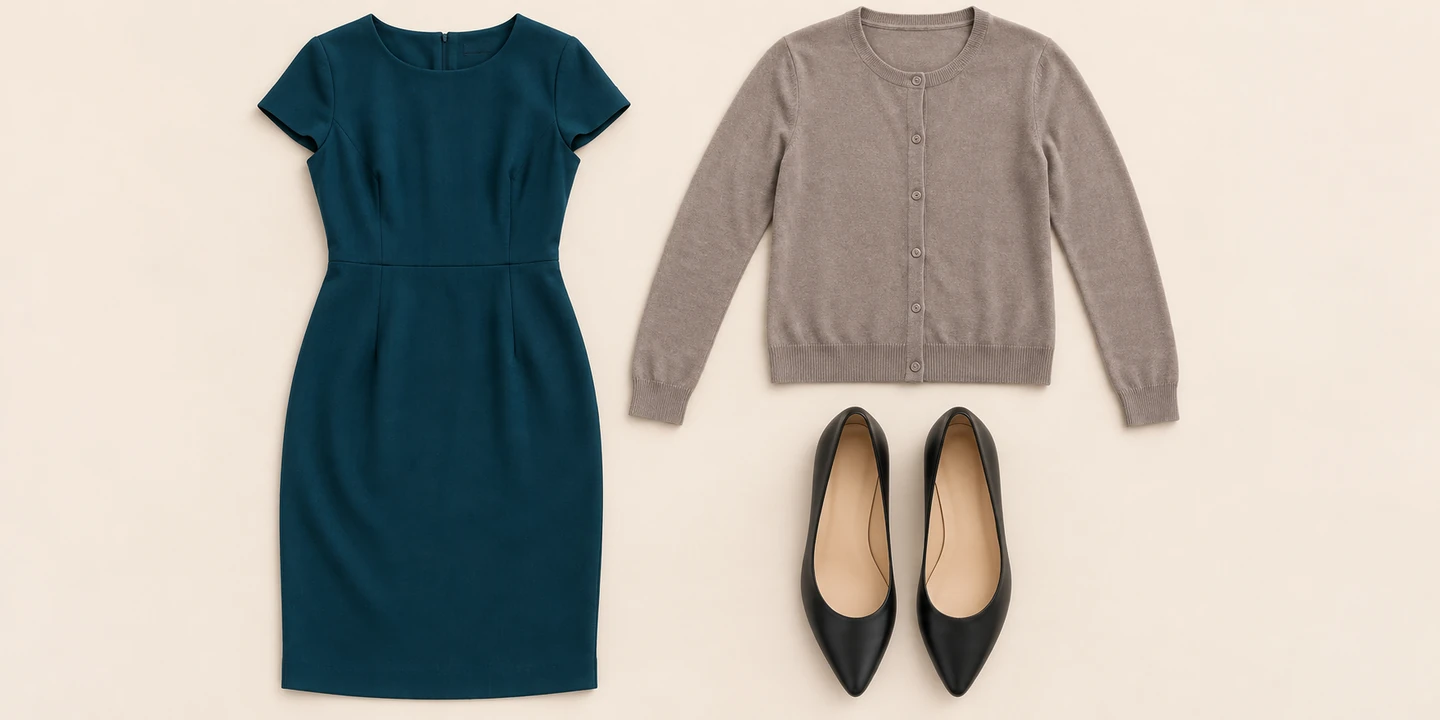
For a dress alternative, our combination is a deep petrol-blue knee-length dress, a soft-taupe cardigan, and black closed-toe pointed flats. Put the cardigan on rather than judging it beside the dress: the shoulder seams, sleeves, and neckline should work together. This is an option for a setting where the softer layer suits the expected dress level.
A skirt offers another route: pair a charcoal knee-length skirt with a soft-lavender blouse and black flats, adding a matching jacket for a more formal finish. Sit down and walk in it before settling the hem. When choosing what to wear to a job interview, use the silhouette you can wear comfortably throughout the appointment.
For plus-size or maternity clothing, apply the same process to the fit you need now. Test the waistband seated, the blouse across the chest, and the jacket with your arms forward. Choose trousers, a skirt, or a dress on those practical terms rather than a separate set of body-shape restrictions.
Interview outfits for men
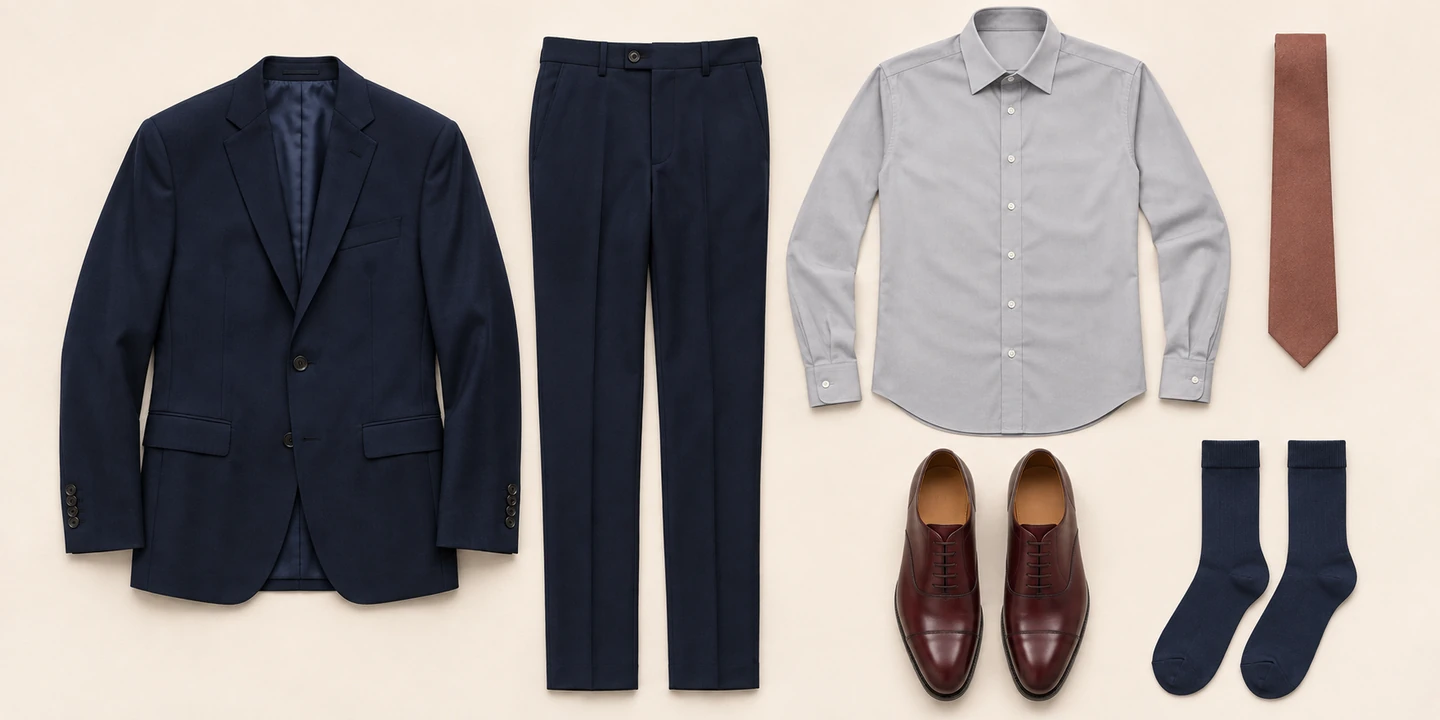
Our formal outfit combines a navy suit jacket and matching trousers, a light-gray dress shirt, a muted-copper tie, oxblood oxford shoes, and navy socks. The warm tie and shoes distinguish it from a plain navy-and-white combination. Keep the tie pattern simple or choose a solid fabric.
For a business-casual interview, use the steel-blue shirt and sand chinos shown earlier, without adding a tie by default. If a jacket is expected, try a charcoal blazer with those separates. The answer to what to wear to a job interview should include the whole combination: collar, waistband, hem, shoes, and socks, not just whether you own a jacket.
05 / Video & commute
Dress for a video interview and the trip there
Video interview
Choose the same level of dress you would use for the employer's in-person interview. Princeton Human Resources' virtual-interview guidance advises taking the format seriously and testing the camera and lighting beforehand.
Try the complete outfit in the actual camera view. Sit where you will interview, turn on the planned lights, and look at the collar, shoulders, and visible fabric. If a pattern looks distracting in that setup, switch to a plain shirt or top. Wear the corresponding trousers or skirt and shoes so the outfit remains complete when you stand.
Heat, rain, cold, and commuting
For warm weather, choose a lighter-weight shirt and suit or trouser fabric within the requested dress level. Examine the lining and try the layers together. Carry a jacket neatly during the journey when practical, then put it on before the appointment.
For cold or wet weather, fit a coat over the completed outfit and allow space for the jacket sleeves. If you need different shoes for the journey, plan where to change and store them. Include the commute when deciding what to wear to a job interview, so the clothing you selected is ready when you arrive.
06 / Final outfit check
Shoes, colors, fit, and the final outfit check
Choose clean shoes that match the outfit's formality and let you walk comfortably. Our conservative starting choices are leather loafers, oxfords, or closed-toe flats. UMass Dartmouth's interview-attire guide emphasizes clean, pressed clothing, fit, and coordinated shoes and socks.
Sneaker advice varies even within USF's career-services guide: its business-casual list includes fashion sneakers, while its general guidelines advise avoiding sneakers. UMass Dartmouth takes a more conservative approach to interview shoes. For an unclear dress code, choose the loafers or flats above; use sneakers when the actual interview guidance supports them.
Choose colors you can combine easily: charcoal with lavender, navy with light gray, or sand with steel blue. Use one quieter accent and keep the other pieces simple. Color is a coordination decision here, not a prediction of what an interviewer will think.
Finish your choice of what to wear to a job interview with a full fitting. Sit, stand, reach forward, and walk. Adjust a pulling button, dragging hem, or slipping heel before the day. Remove visible lint, clean the shoes, and wash or press garments according to their care labels. Set the outfit out together so a missing sock or unsuitable layer does not become a last-minute problem.
07 / Outfit questions
Interview outfit questions answered
Choosing your outfit
What is the best outfit for an interview?
Choose the complete outfit that fits the employer's stated level of dress and the day's activities. A matching suit is our formal starting point; trousers with a collared shirt or refined blouse suit a business-casual brief. Begin there when deciding what to wear to a job interview, then adjust the fit and shoes.
What should a woman wear to an interview?
Choose a trouser suit, a skirt outfit, or a dress suited to the appointment. The charcoal suit with a lavender blouse is our formal example; the petrol-blue dress and taupe cardigan offer a softer alternative. Refined flats complete either route without requiring heels.
What should a man wear to a job interview?
Use a suit and dress shirt for a formal brief, adding a tie when appropriate to the employer's expectations. For business casual, try the steel-blue button-down, sand chinos, and dark-brown loafers with matching socks. Fit the trousers with those shoes on.
Casual and workplace questions
Can I wear casual clothes to an interview?
Yes, when the appointment is explicitly casual. Choose clean, intentional pieces such as neat trousers and a plain collared shirt. Distinguish the interview instructions from what employees happen to wear on an ordinary workday.
What should I wear to a restaurant interview?
For a standard conversation, start with a neat shirt or blouse, trousers, and clean shoes. For a trial shift or site visit, follow the specific clothing and footwear instructions supplied for that activity. A restaurant interview and a working assessment can require different preparation.
Finishing details
What should I avoid wearing to an interview?
Skip dirty or visibly damaged clothing, distracting fit problems, and items that conflict with the appointment's instructions. Replace a top that pulls open or shoes you cannot walk in comfortably. Use the fitting steps above to identify the actual problem rather than rejecting an entire clothing category.
What shoes should I wear to a job interview?
Clean loafers, oxfords, or closed-toe flats are our dependable starting choices. Match them to the outfit and any site instructions. Try both shoes with the socks or hosiery you intend to wear, then walk and sit in the complete combination.
Can I wear jeans to a job interview?
Use jeans only when they are explicitly allowed or the interview is clearly casual. Choose a clean, dark, undamaged pair with a neat top and shoes. USF's smart-casual guidance includes jeans; that context matters. When the dress level remains unclear, choose chinos or tailored trousers instead.